The title of this exhibition, Landscape Painting, is more apt that one might think. Landscape art is really about one’s stretching into space and this is what Mara seems to be doing here. To clarify, let’s start with what the canonical landscape painter Cèzanne writes: “The landscape thinks itself in me and I am its consciousness.” So pompous that Amy Sillman has to put it more carnal: “When Cèzanne went to paint Montagne Sainte-Victoire, he went out to have a relationship with a mountain, to practically lick it with his eyeballs.” This is accurate and fun but it is also generic: the fact that art is subjective and a very personal enterprise isn’t one of the many uncertain facts about art.
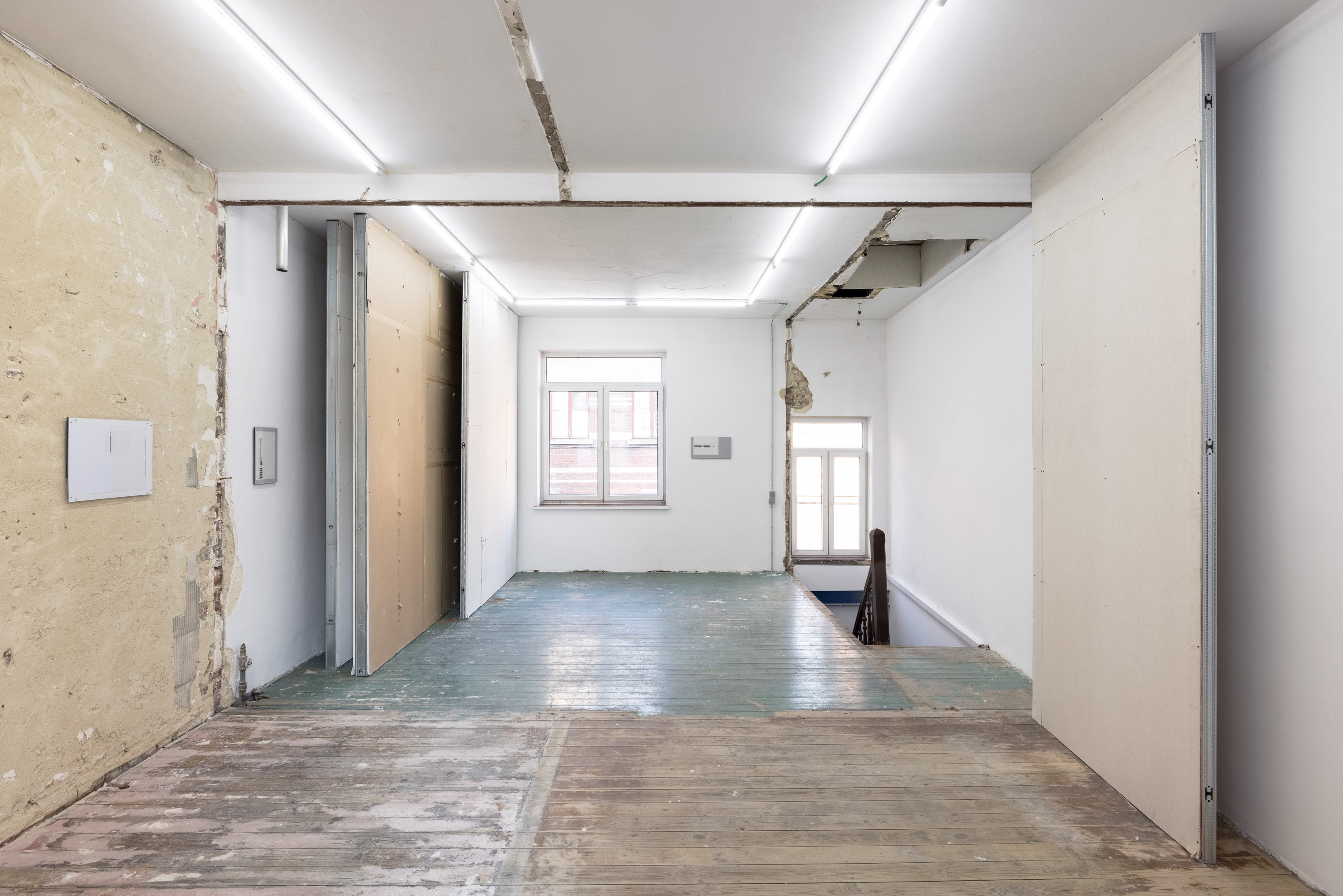
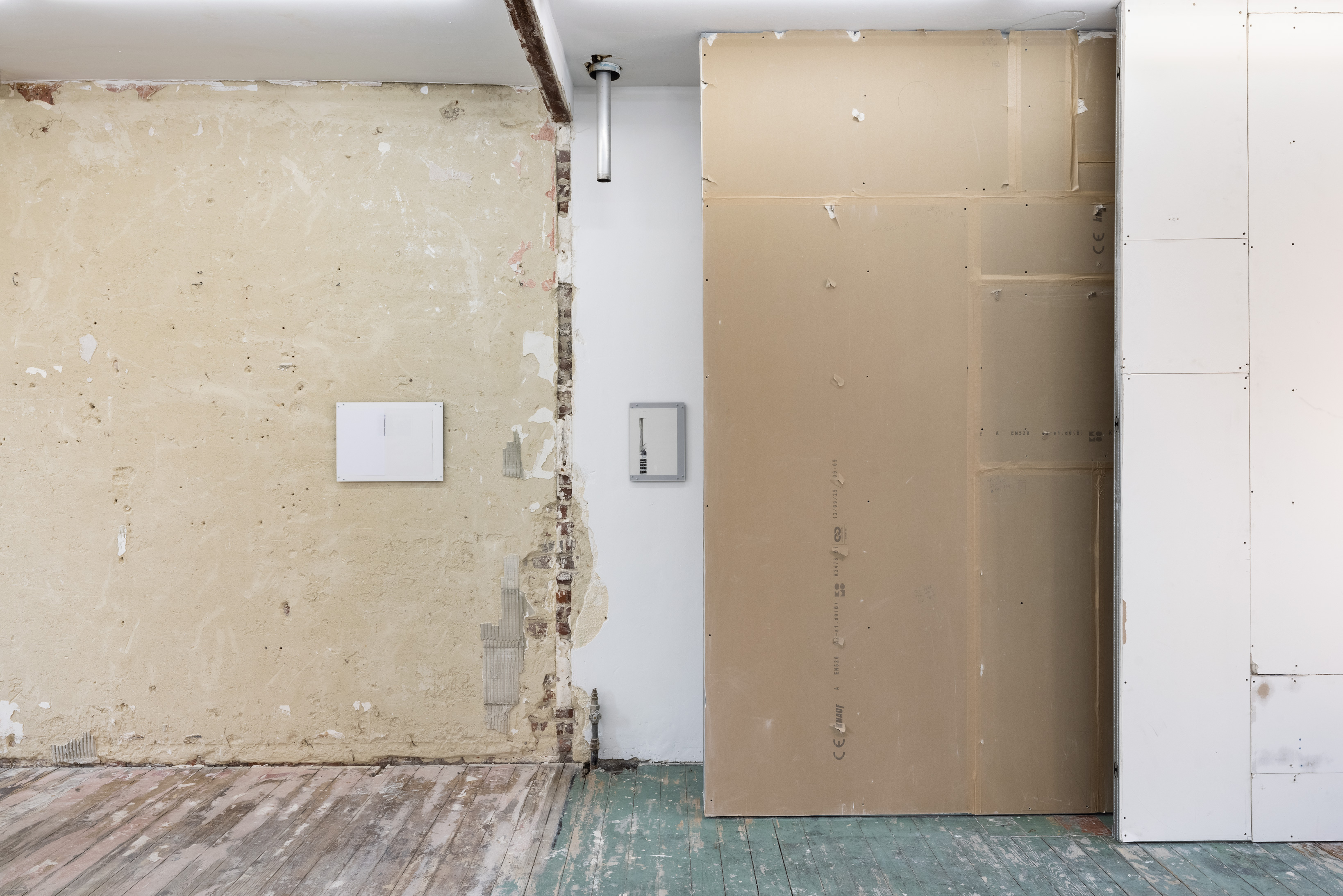
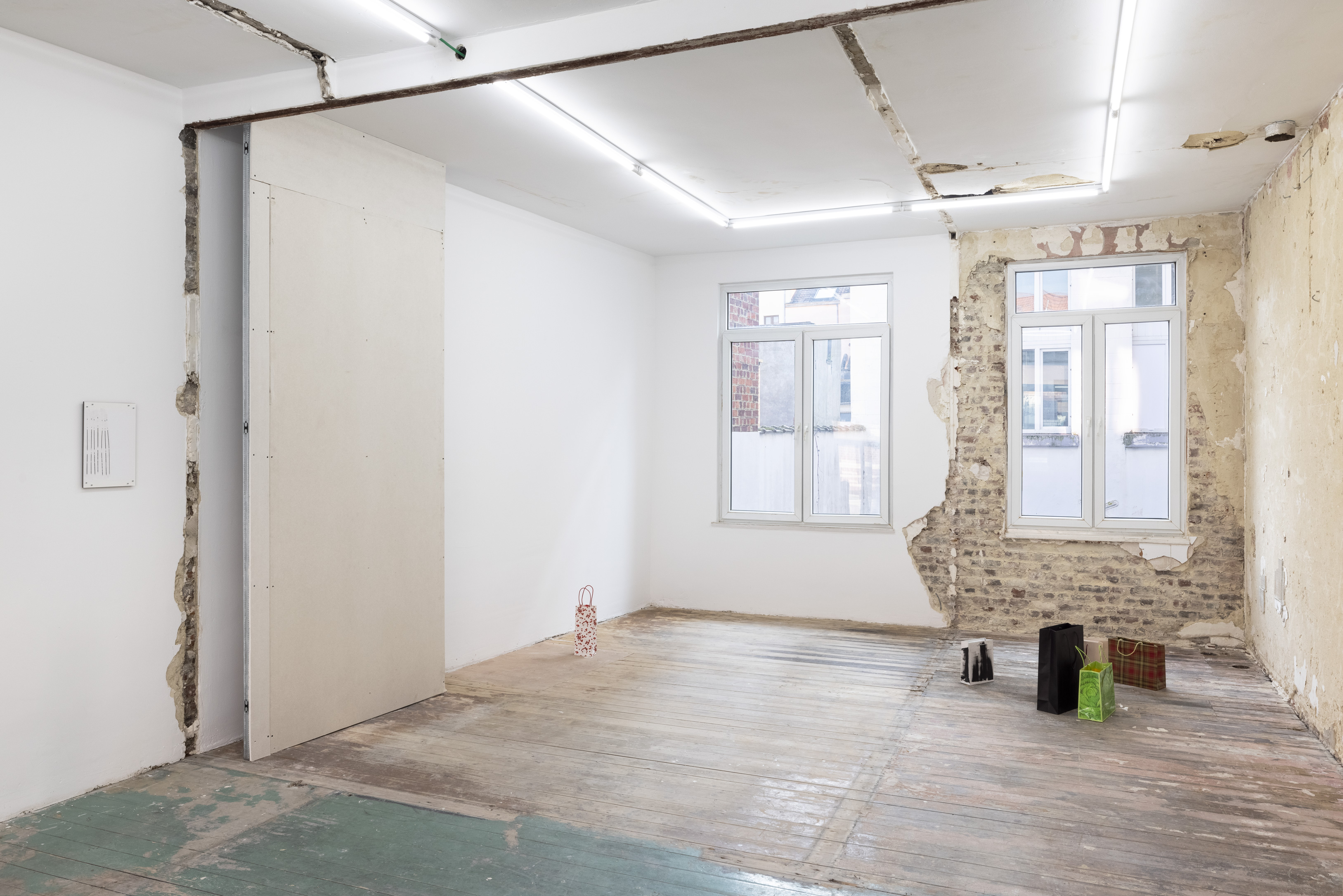
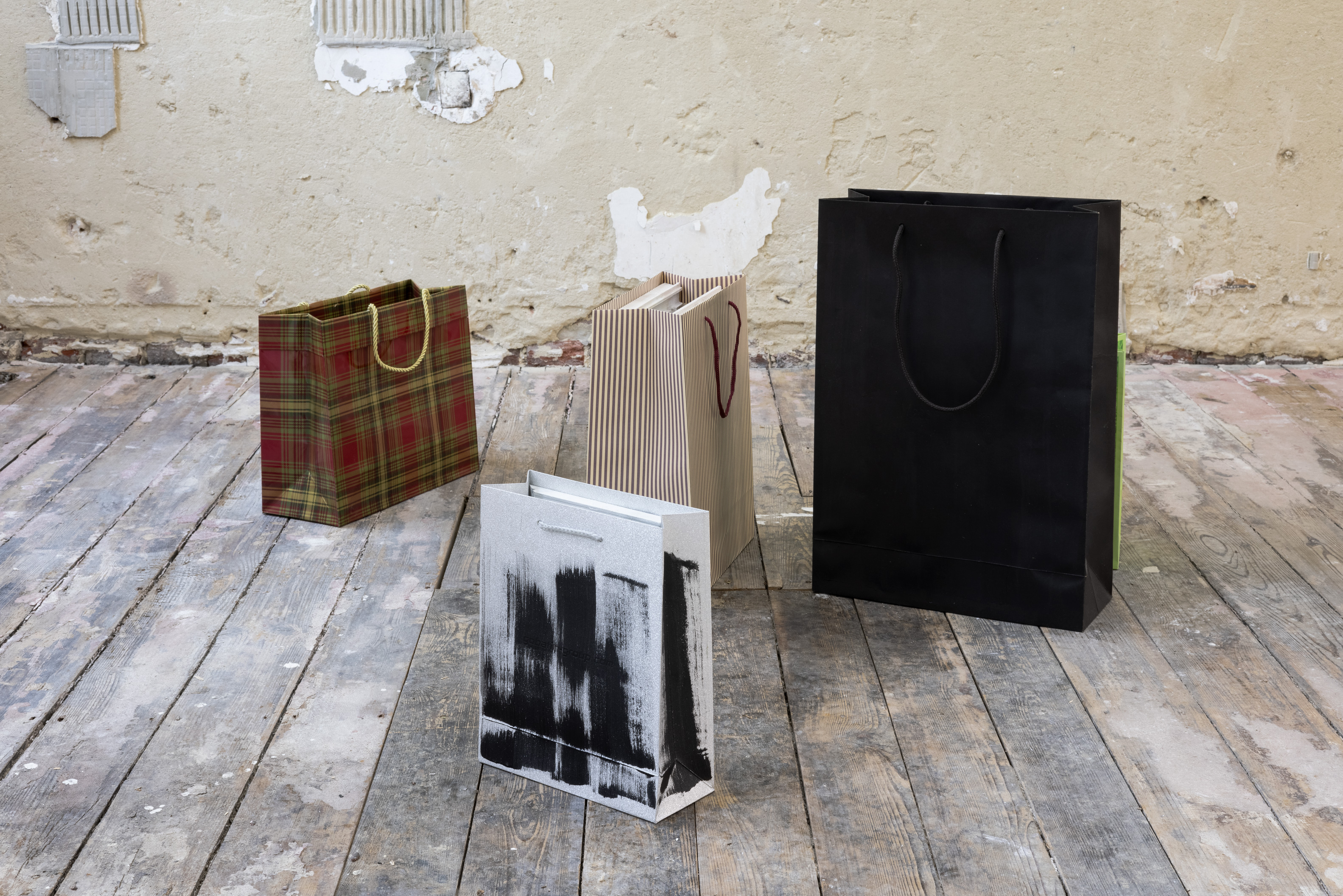
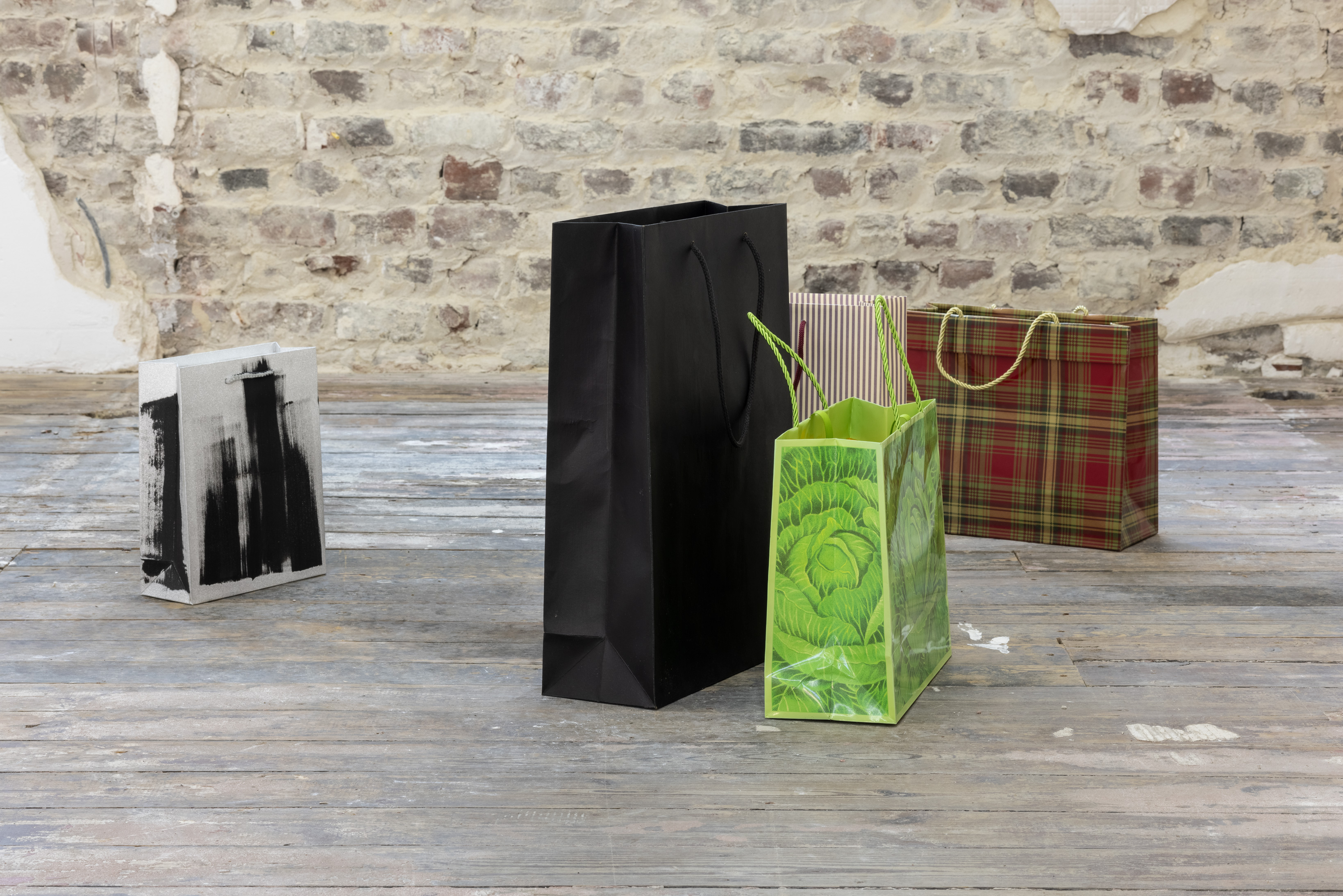
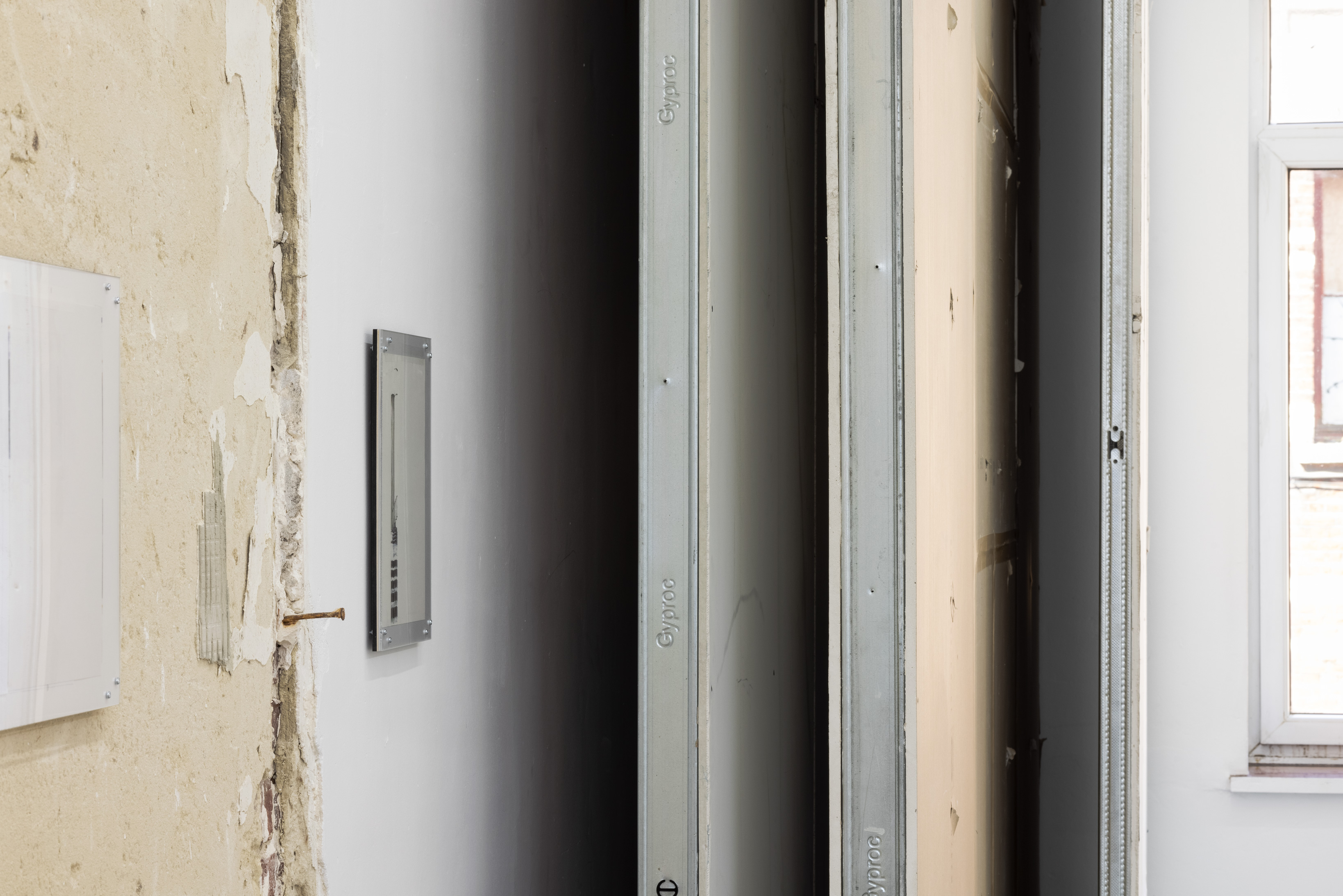
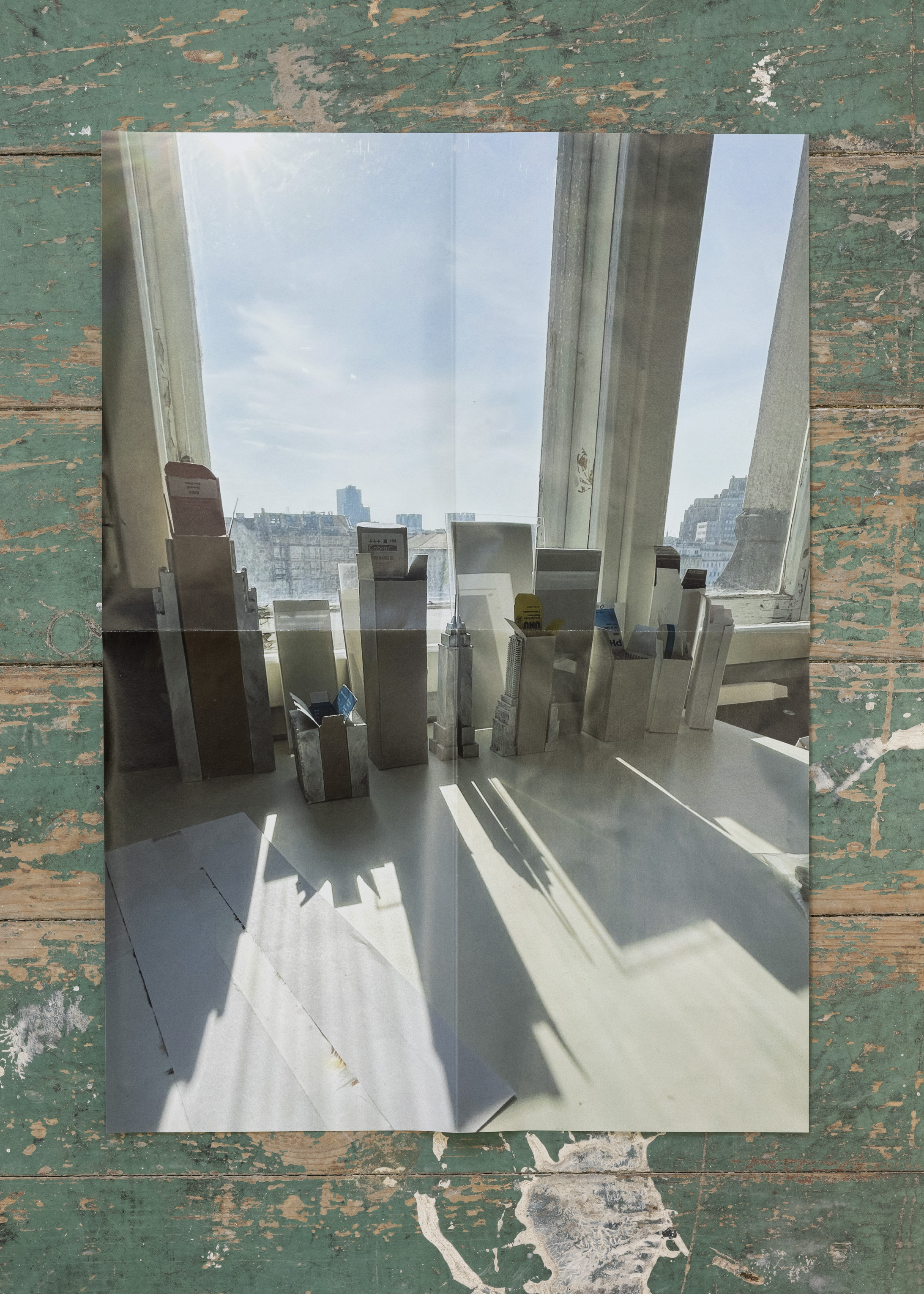
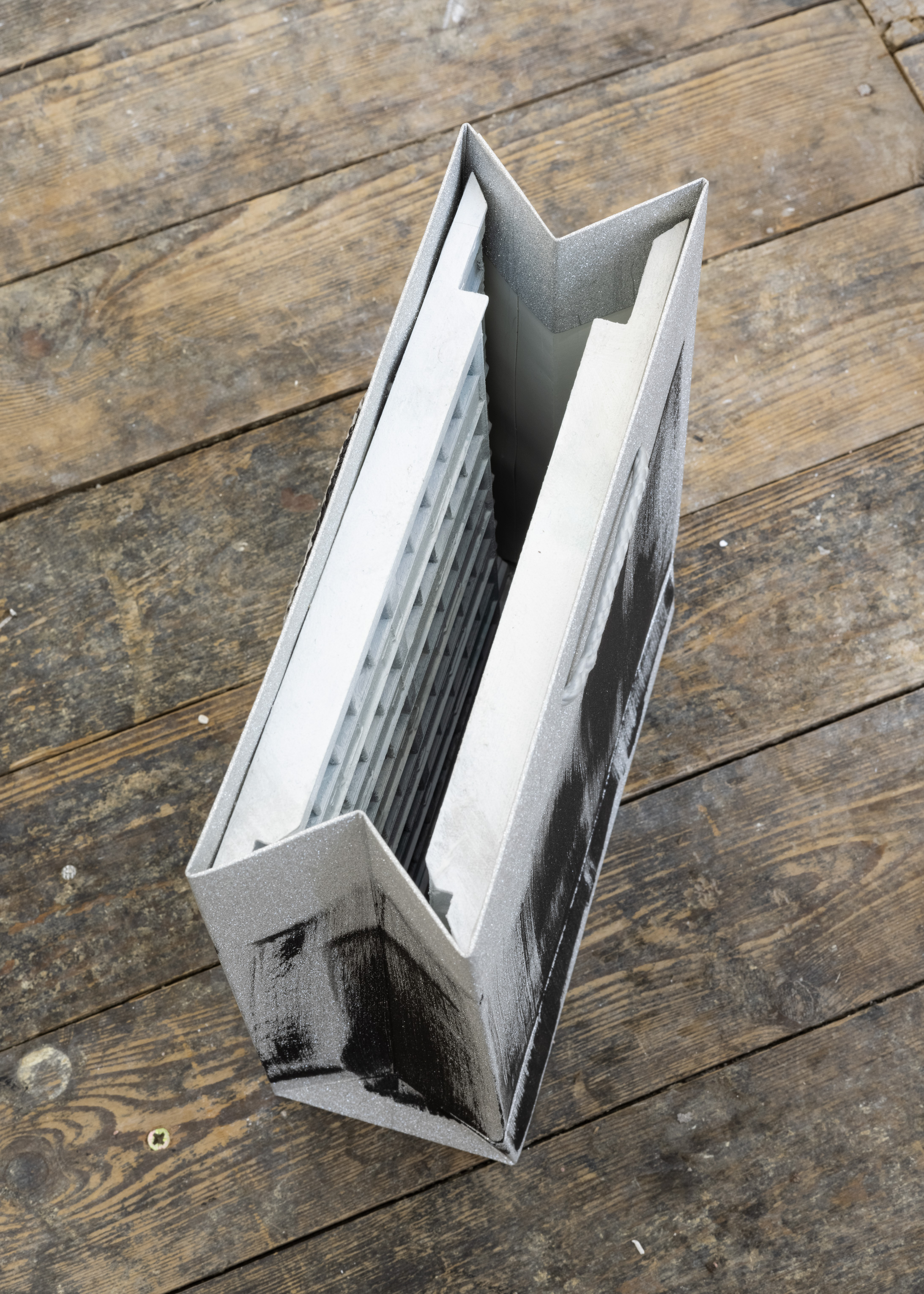
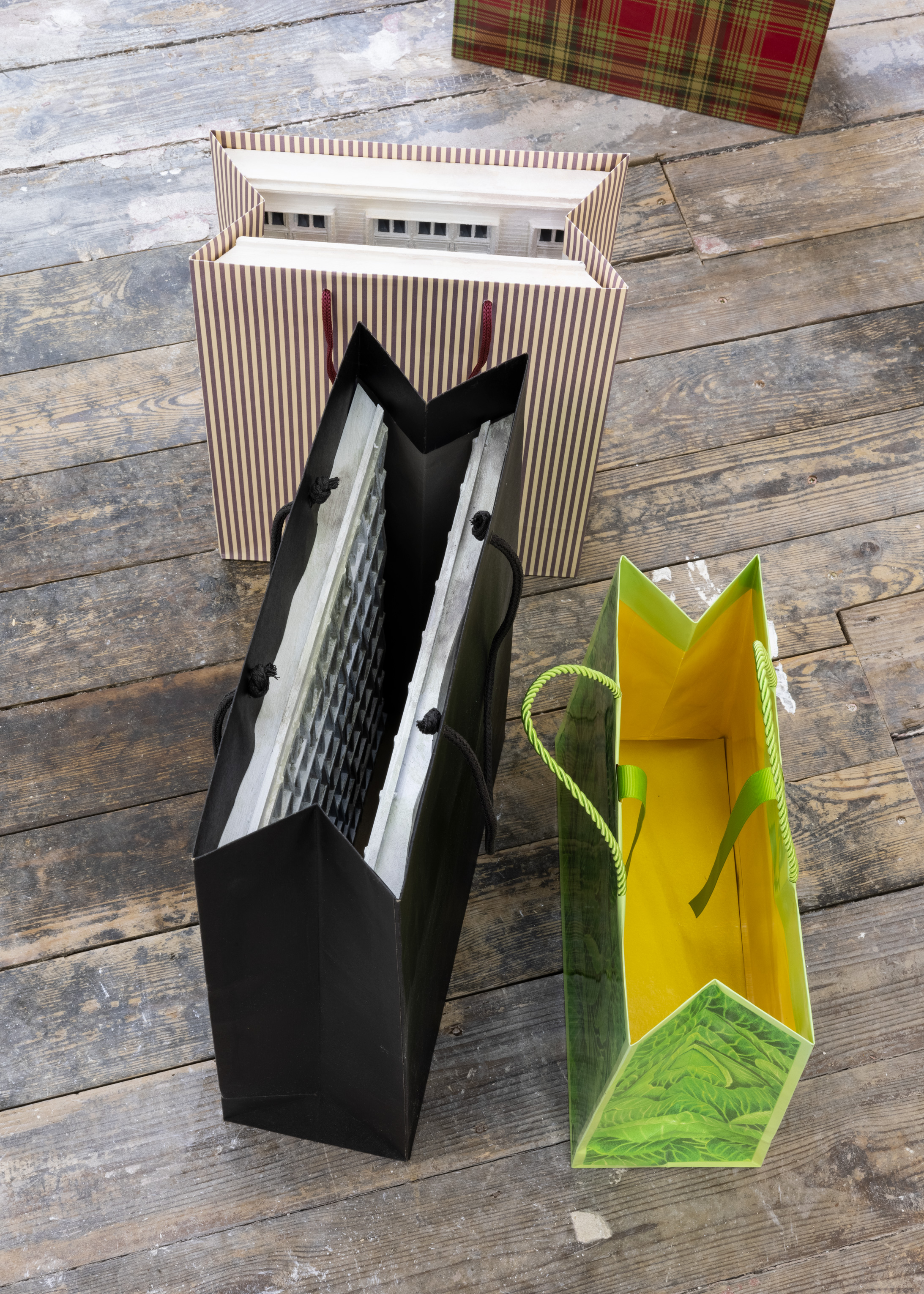
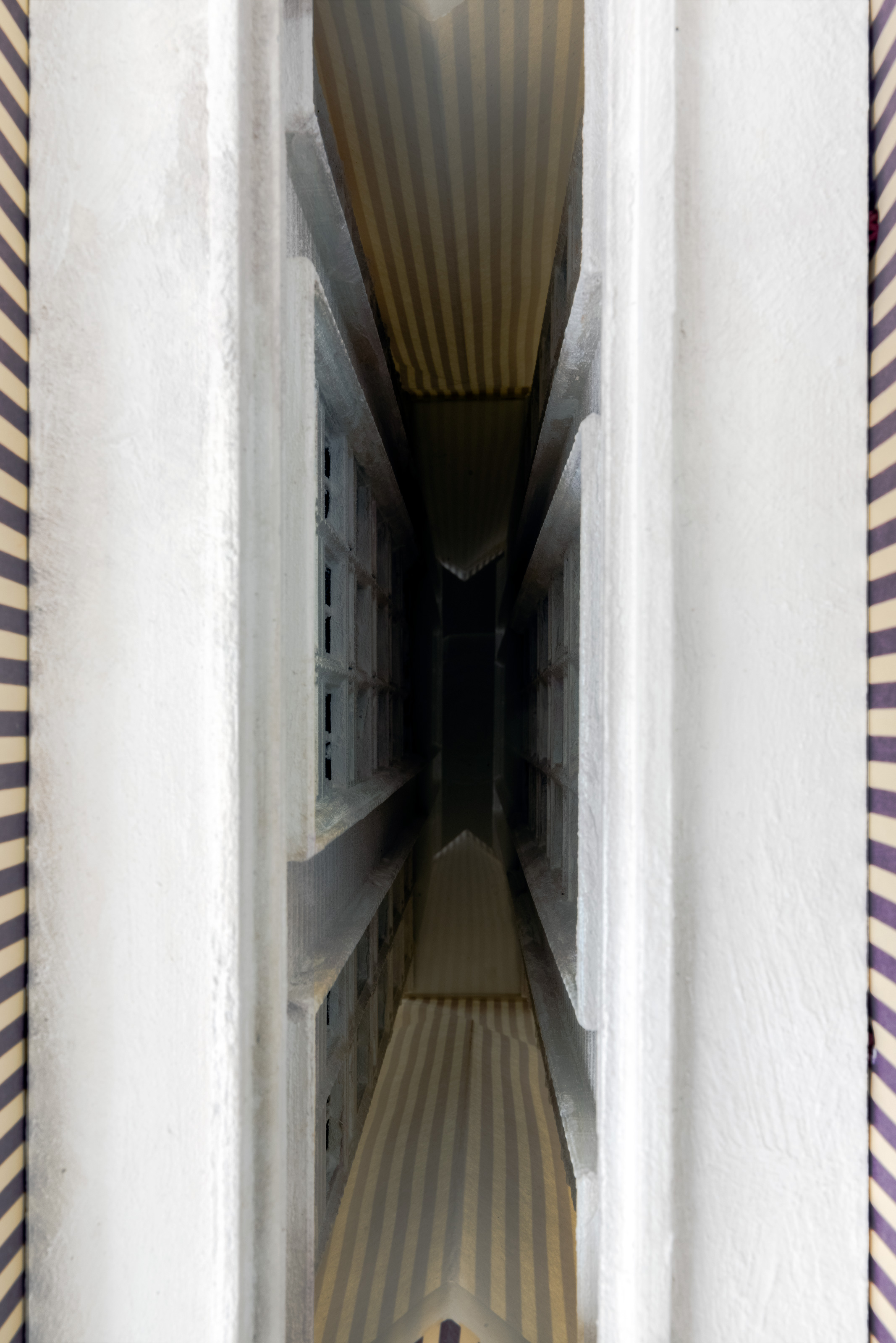
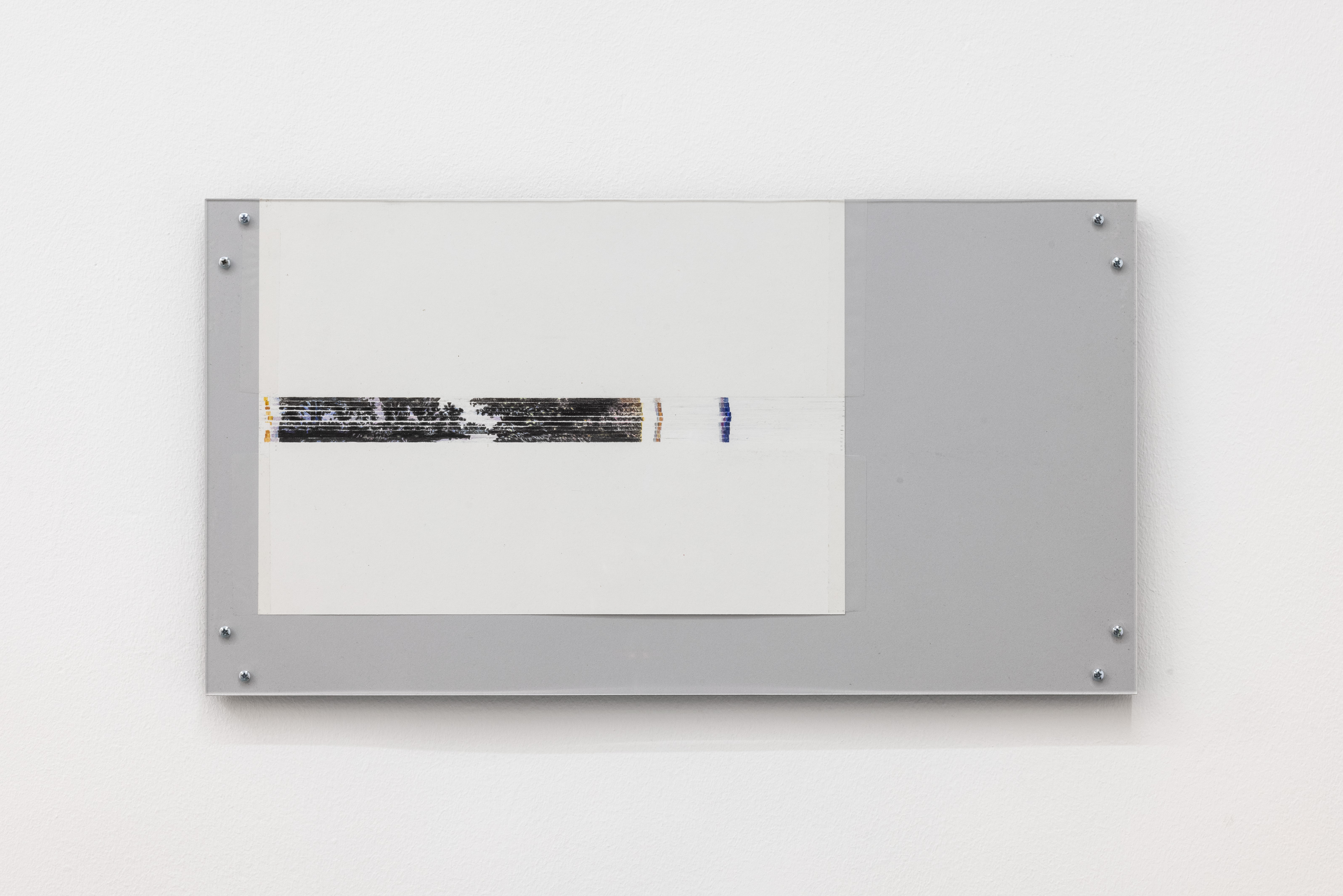
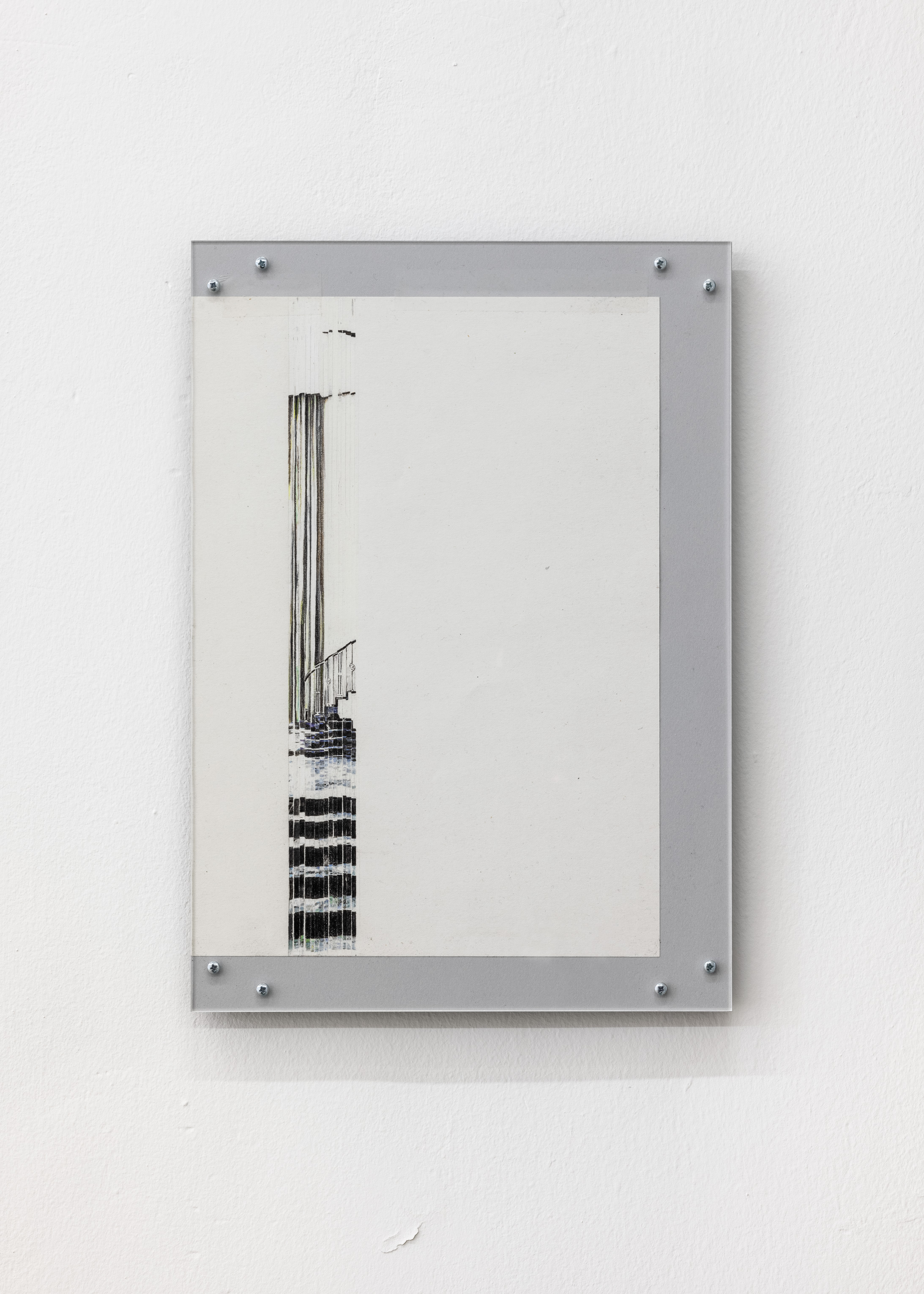
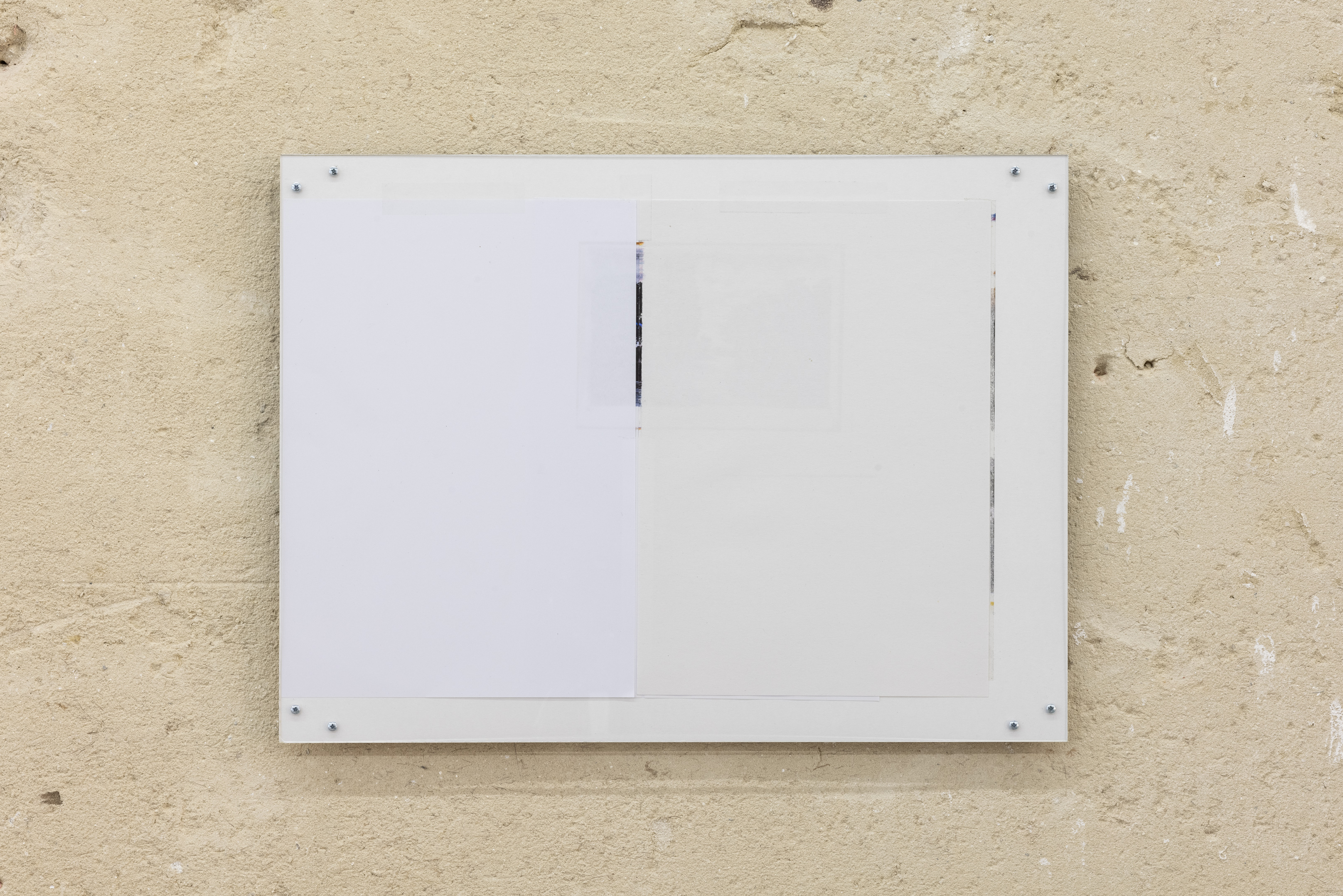
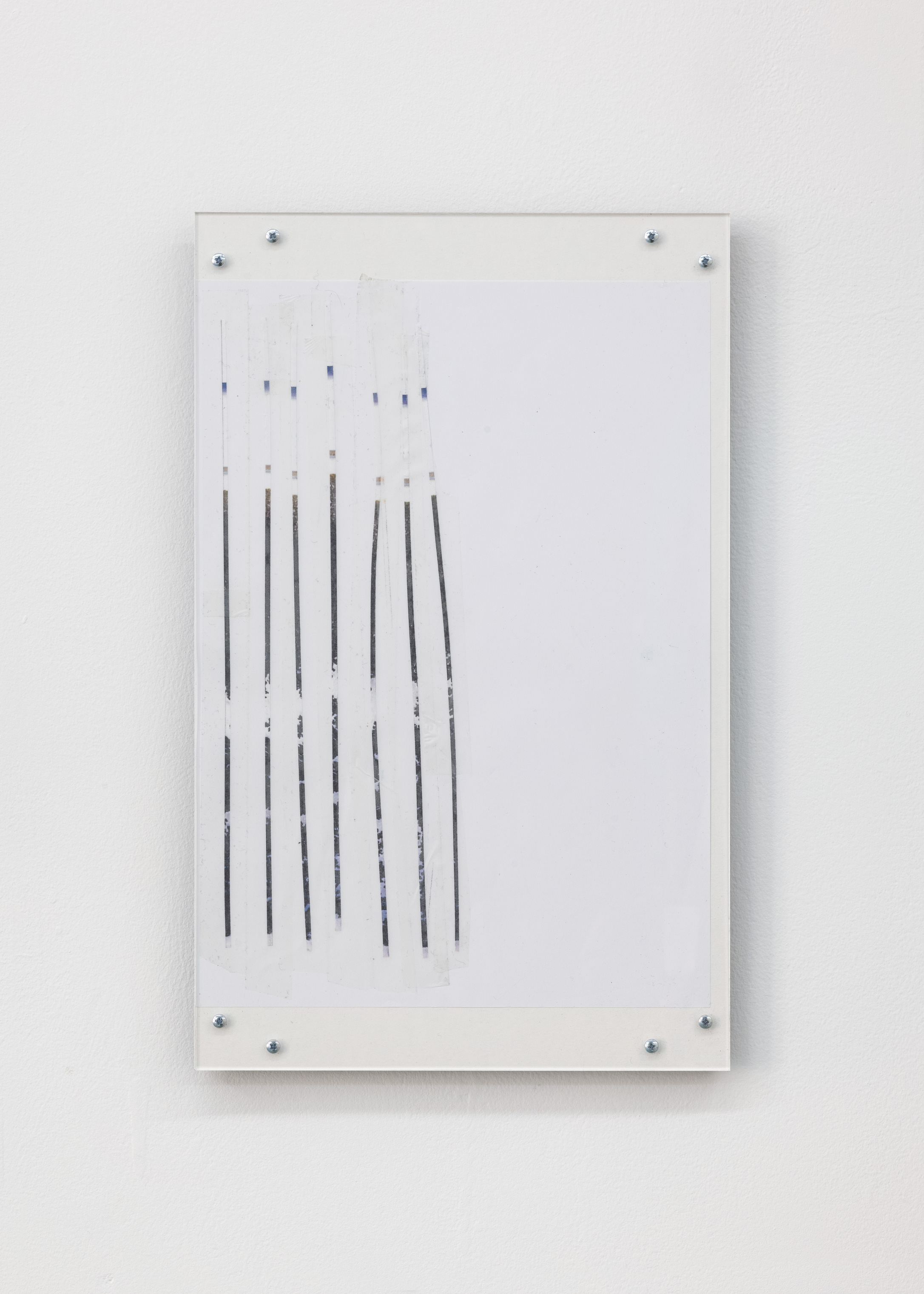
In this exhibition, there is a collection of things the artist has stretched to reach out to, like in the idea of a landscape described above. There are added walls that shift the room’s volumes, houses in bags, a picture of architecture models, and interiors found in various places turned into fragmented drawings. A lazy argument is to say that the exhibition is a subjective take on architecture. It is a landscape of the built environment seen through the eye of the artist, like what Cèzanne believed he was doing with his favorite mountain. But this proposition is closer to a truism than anything else. It is of course true, but what then?
Let’s go further and ask what exactly is the subjective state of an artist stretching out to things, making landscapes. Let’s ask how that subjective state might have changed from one day to another, from one month to another, from a season to another, year to year, feeling to feeling. Personal views change. Nothing is really one and this philosophical point is key to the show. While trying to pin down ideas, Mara and I spoke about impression; impression over description, uncertainty over meaning, the distance from a well rounded aboutness our brains would otherwise tend to. It went further than mere subjectivity and steered toward a flowing impression of change.
What brings everything together for me in Landscape Painting is to acknowledge the incoherence that is typical of impressions, finding incoherence beautiful even, without using psychedelics tricks and the pleasures of surrealistic absurdism (This is achieved through formal austerity and repetition in the presentation; think of the repeating narrow line of the drawings which resembles the urban canyons in bags and narrow side of the walls). There is a fruitful antiscientific and antirational proposal being put forward, asking the viewer to peer down into a carrier bag and see buildings, which they might be recognized again on the works on paper, and lost again in the walls made out of other walls. There is a structure to this exhibition, possibly like the composition of a landscape painting, which eventually represents nothing, yet it is rescued from emptiness.
–Piero Bisello
1 Joachim Gasquet, “Cézanne: a Memoir with Conversations” (1921; 1991)
2 Amy Sillman, “Selected Writings and Drawings” (2018; 2022)