Paul Scheerbart’s glass architecture was imagined in the early twentieth century as a radical break from the enclosed interiors of late nineteenth-century bourgeois life. Glass could clear away the accumulated weight of the interior. A new architecture would produce a new environment, and with it, a new culture. So-long bricks! As walls became transparent, light could enter from every direction, and architecture might produce a new relation between the individual and their environment. To ensure he maximized his love for glass and color, Scheerbart envisioned engraved verses on the facade of his utopian Glass Palace: “WITHOUT A GLASS PALACE LIFE IS A BURDEN”.
<< Light Column Avenues beam through a slight nightlit haze. The road, understood through a succession of illuminated verticals. Through these empty streets, a business quarter appears almost diagrammatic; large architectural blocks stand upright with monumental permanence, illuminating the night in stoic silence. >>
The corporate glass-and-steel giants that have come to define today’s skylines seem far removed from the coloured glass palaces Scheerbart dreamt of. The sleek transparency of the contemporary high-rise bears little resemblance to Scheerbart’s exuberant and fantastical vision of glass.
Whilst the material properties of glass remain important, Scheerbart’s real fascination lies elsewhere. He imbues glass with an almost unreasonable transformative power. For him, changing the material of architecture meant changing the conditions of human life itself. Glass becomes utopian, almost delirious bridge between the individual, architecture, light, color and the cosmos. His interest therefore lies less in transparency itself than in the material’s capacity to transform these relations. Glass can become opaque, layered, and reflective.
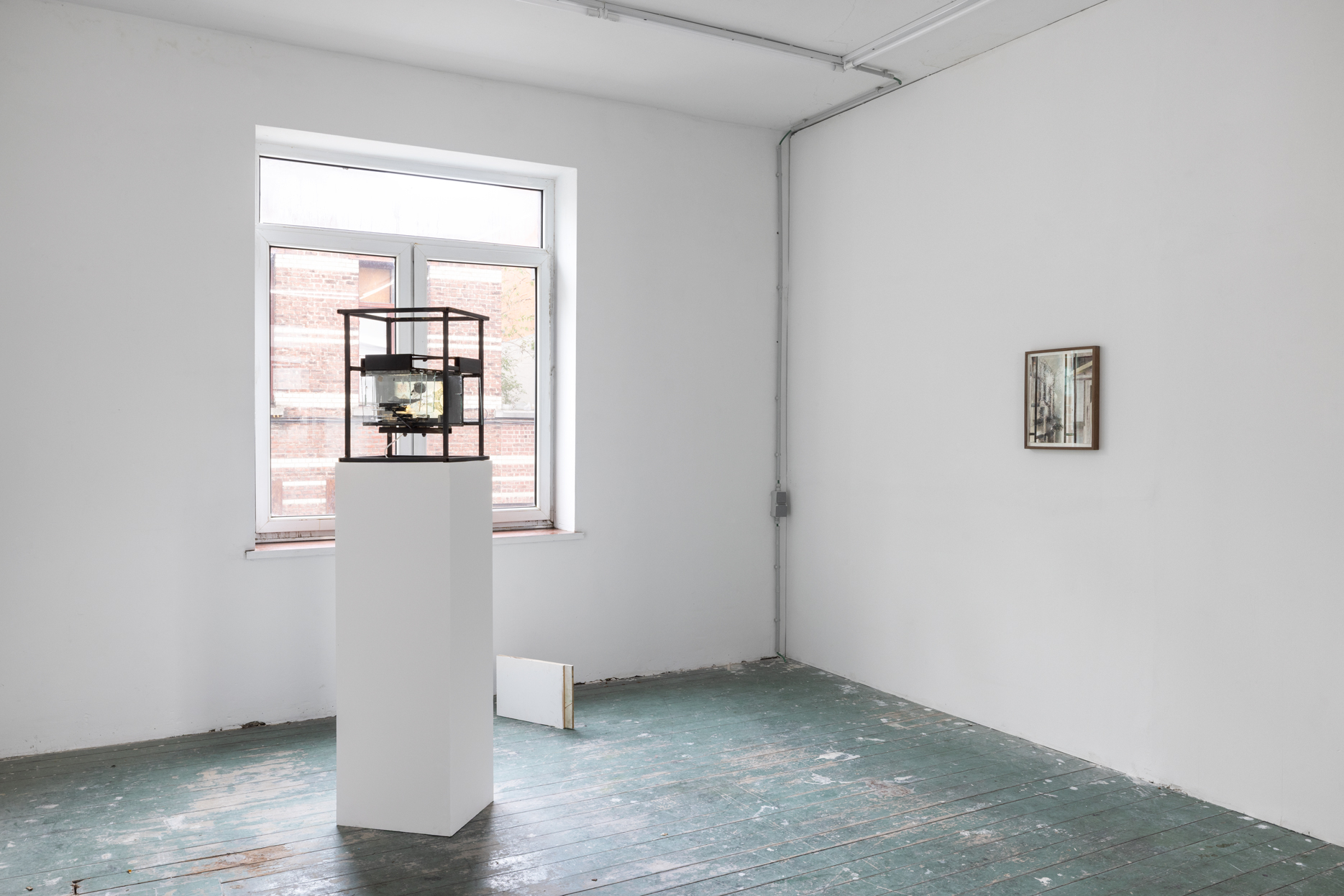
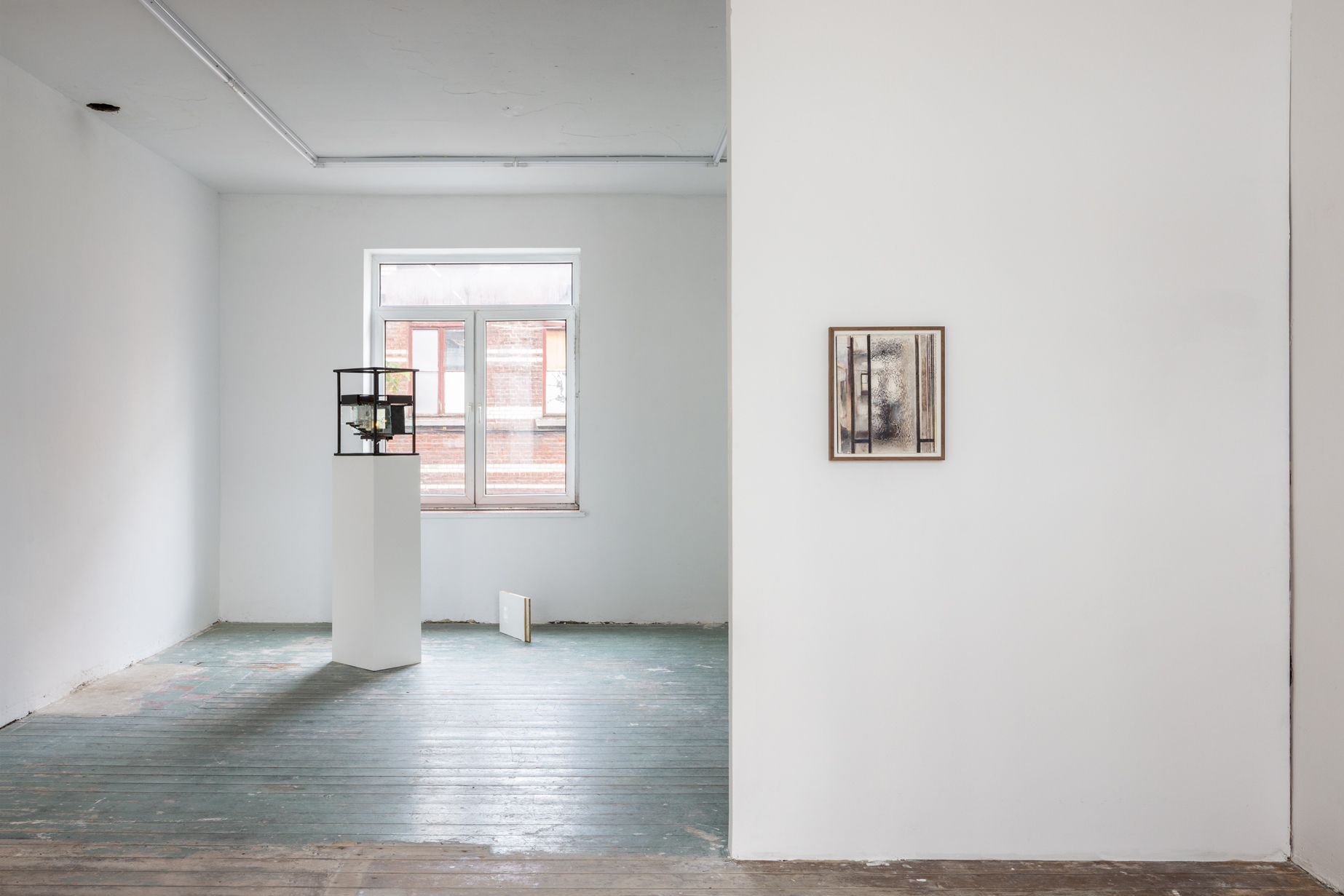
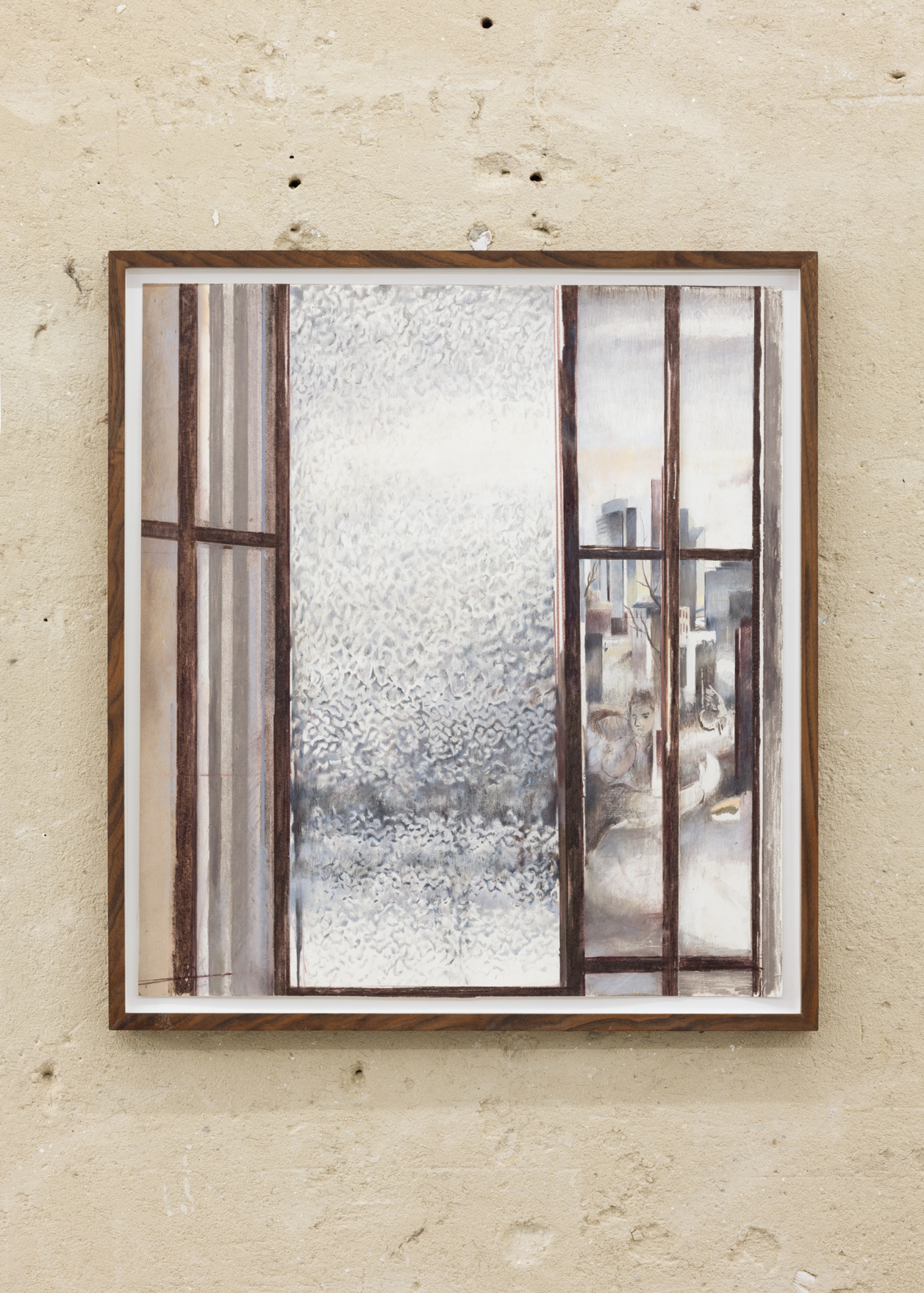
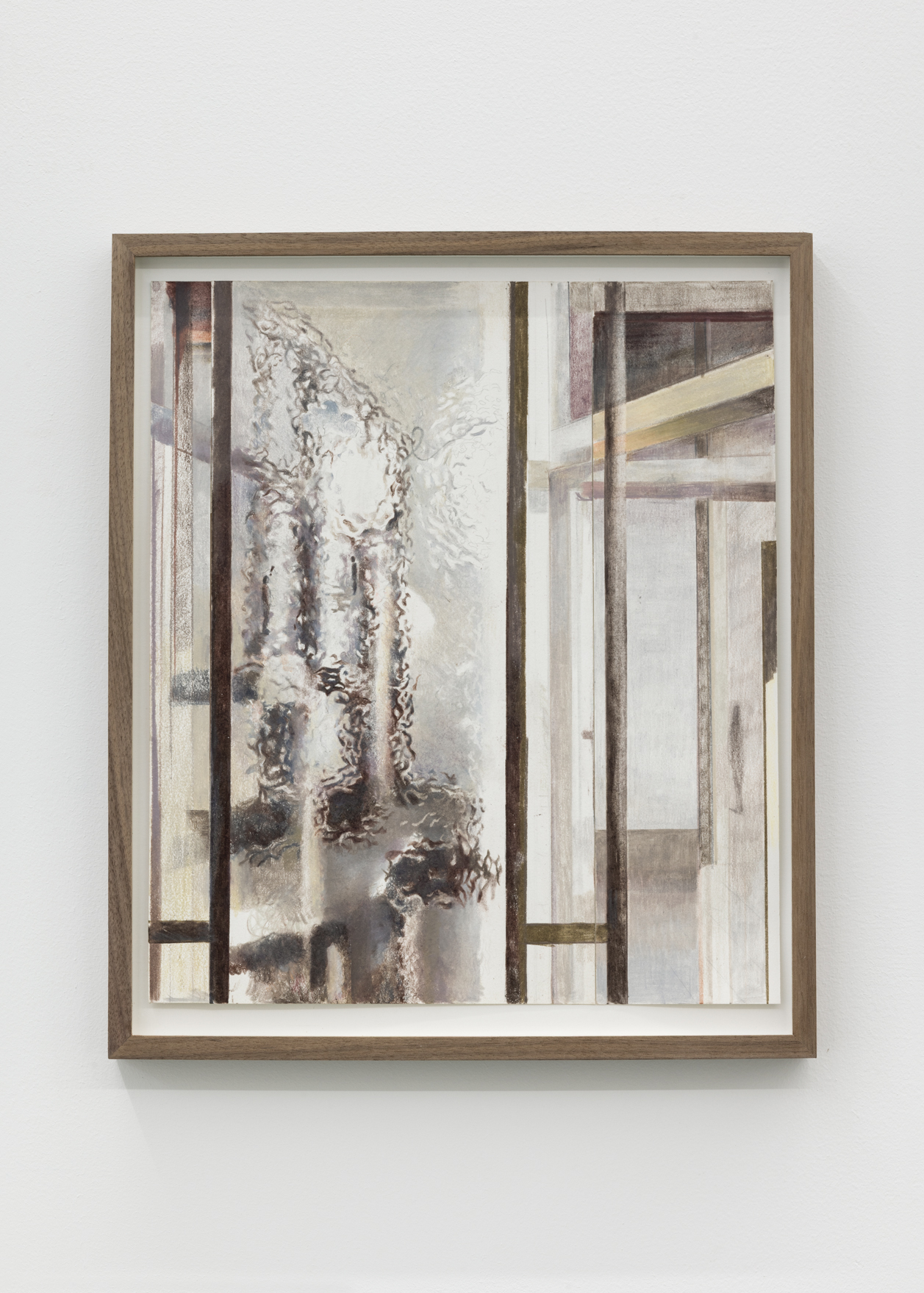
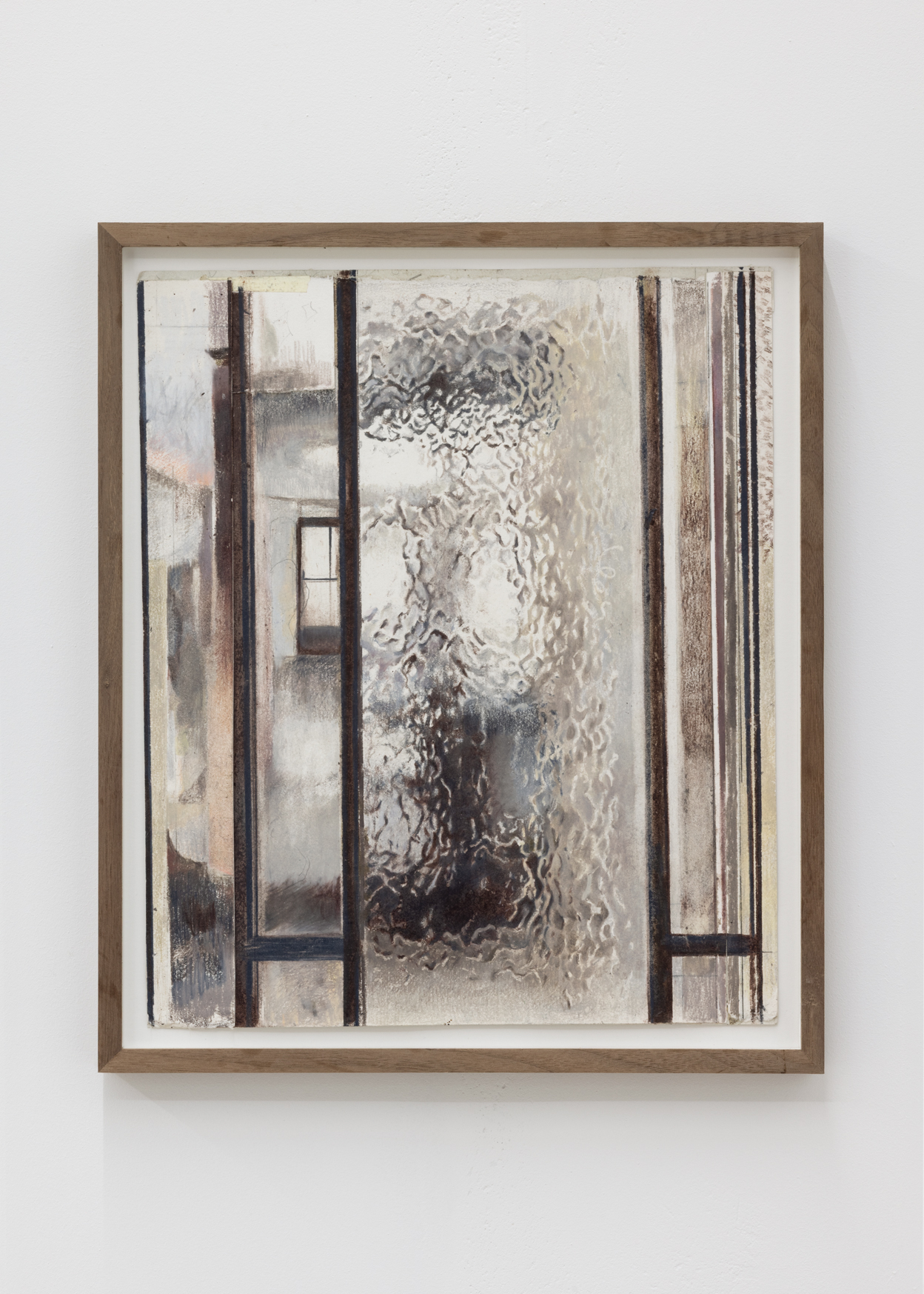
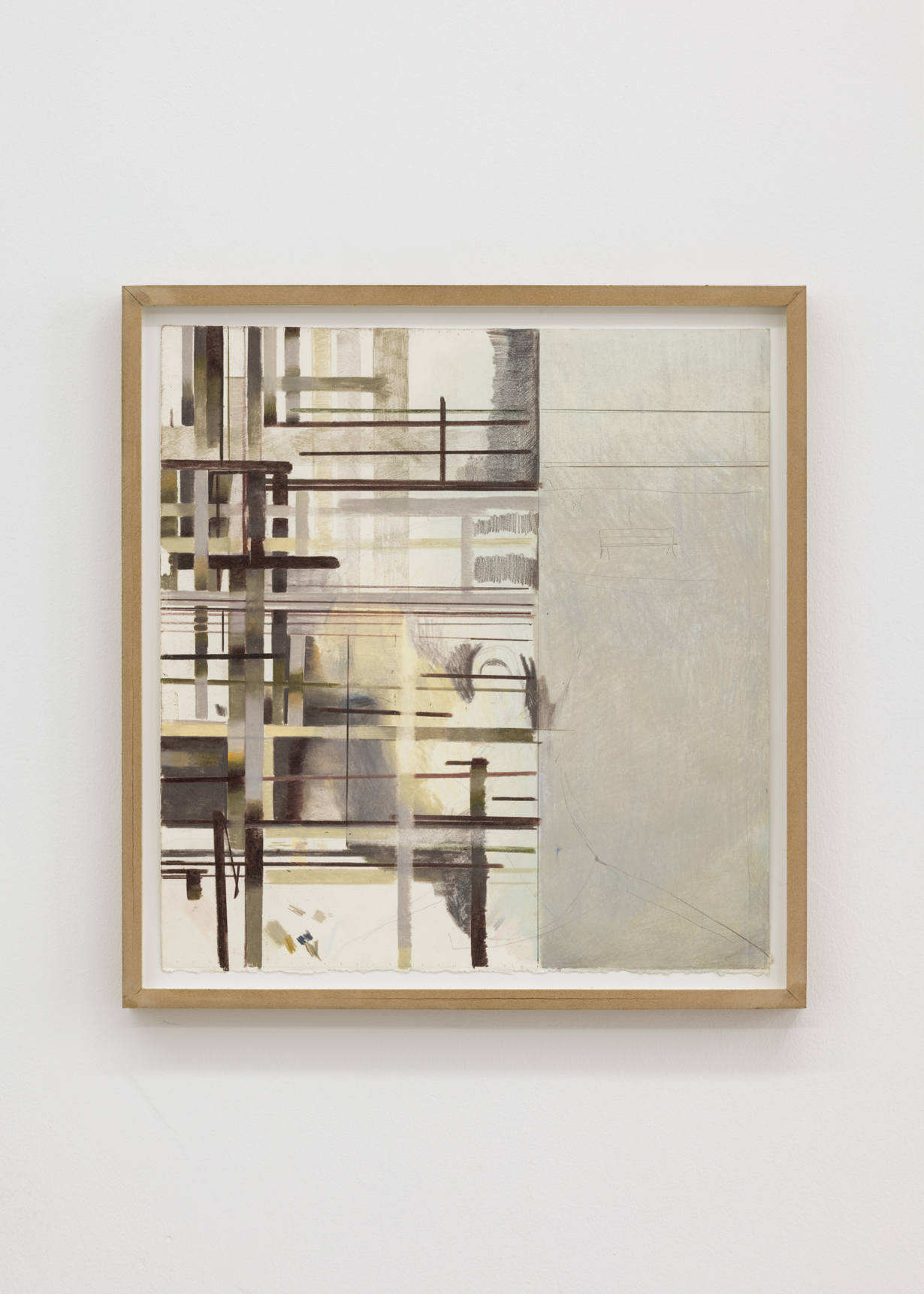
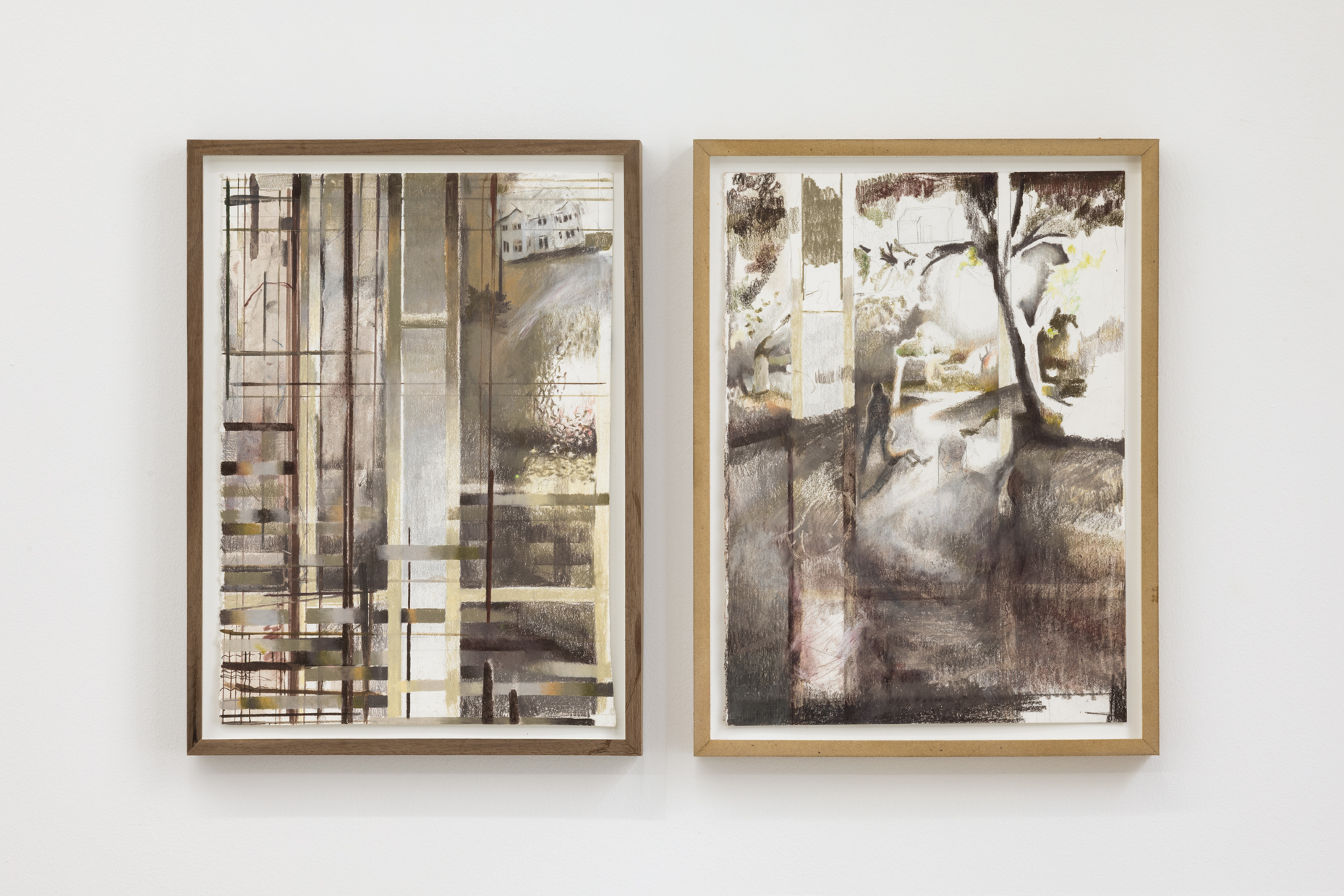
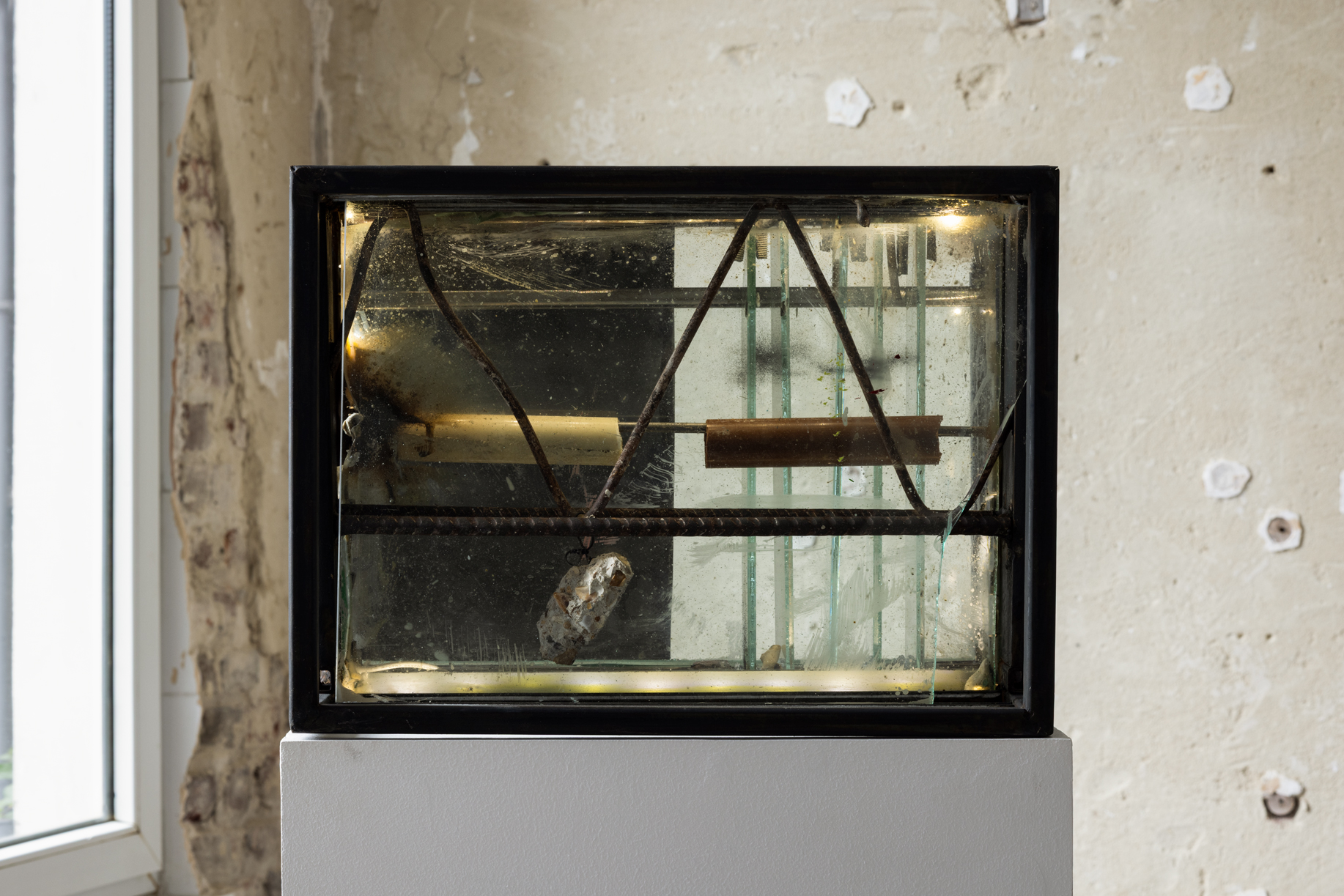
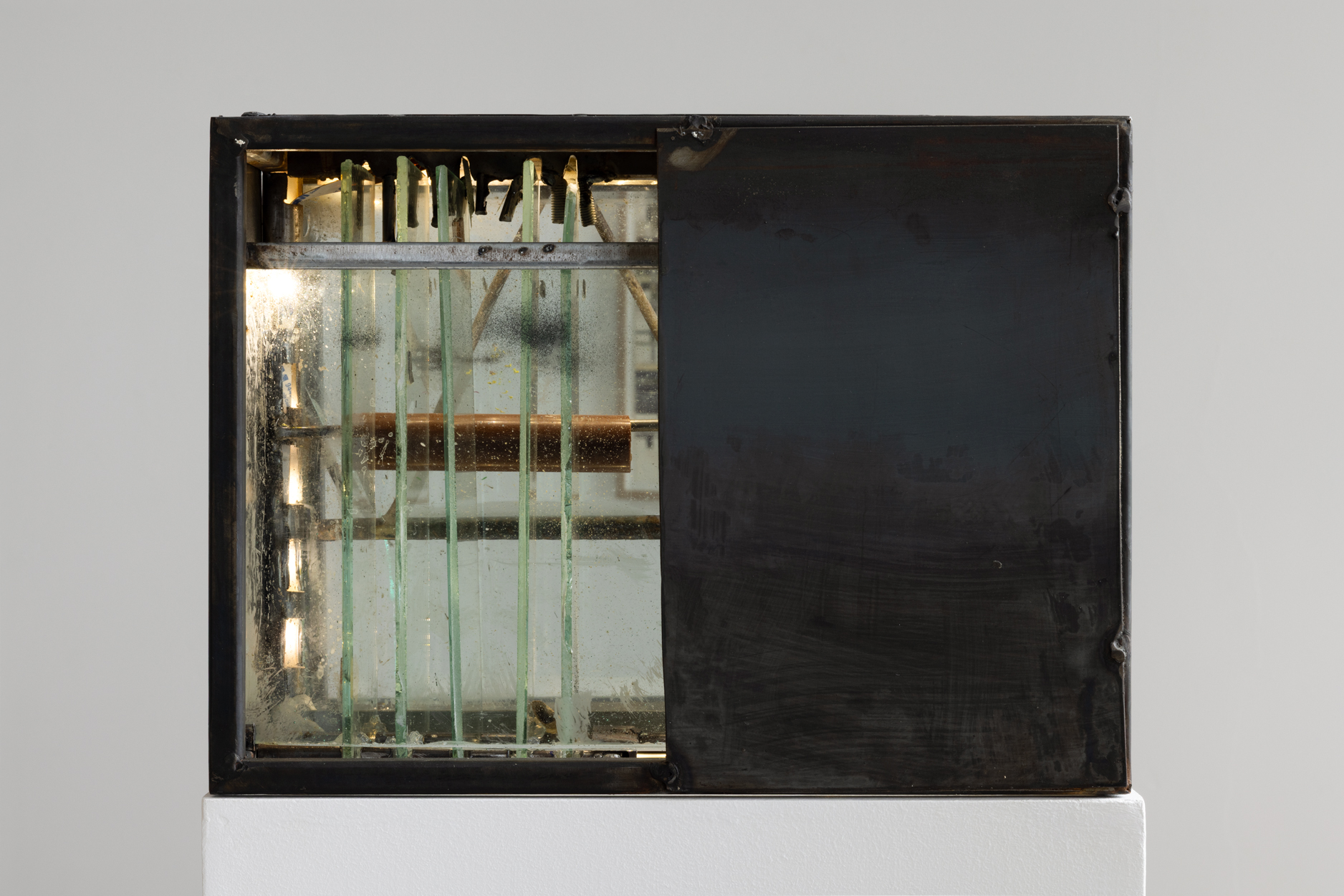
The works of Lukas De Ryck and Mattias Odin both approach opacity. Glass allows certain material qualities to gain a level of simultaneous perception, yet perhaps their works exceed the mere efficiency of transparency and visibility. They do not so much propose a complete space but instead establish a sequence of partial encounters - the premise of a Fensterbild: a landscape, a building, a surface, a cultural landmark, a distant figure, a frame, and a window pane.
The position of the body is continually activated by the bodily relation to its position towards what they’re looking at: the intimate can take on an architectural scale, while the architectural can become something encountered at the proximity of the body.
There is no more distinction between what is inside or outside. One moves from one column to the next column, again and again.
To begin again is never quite to begin from something new. There lies a certain sentiment within this history of glass - Scheerbart, imagined his glass architecture on the threshold of the First World War, in an attempt to improve the future of a society on the verge of collapse. Almost two decades later, Walter Benjamin returned to Scheerbart from the other side of this rupture, looking back at a future that had already radically transformed.
The optical unconscious, coined by Walter Benjamin, and later developed by Rosalind Krauss, names what escapes the eye’s attempt to organise the image into a coherent and mastered field of vision. Not so much a representational image that is hidden behind the image, but rather something that emerges through the instability of looking itself. It becomes a useful way to think about the presented works in the exhibitions.
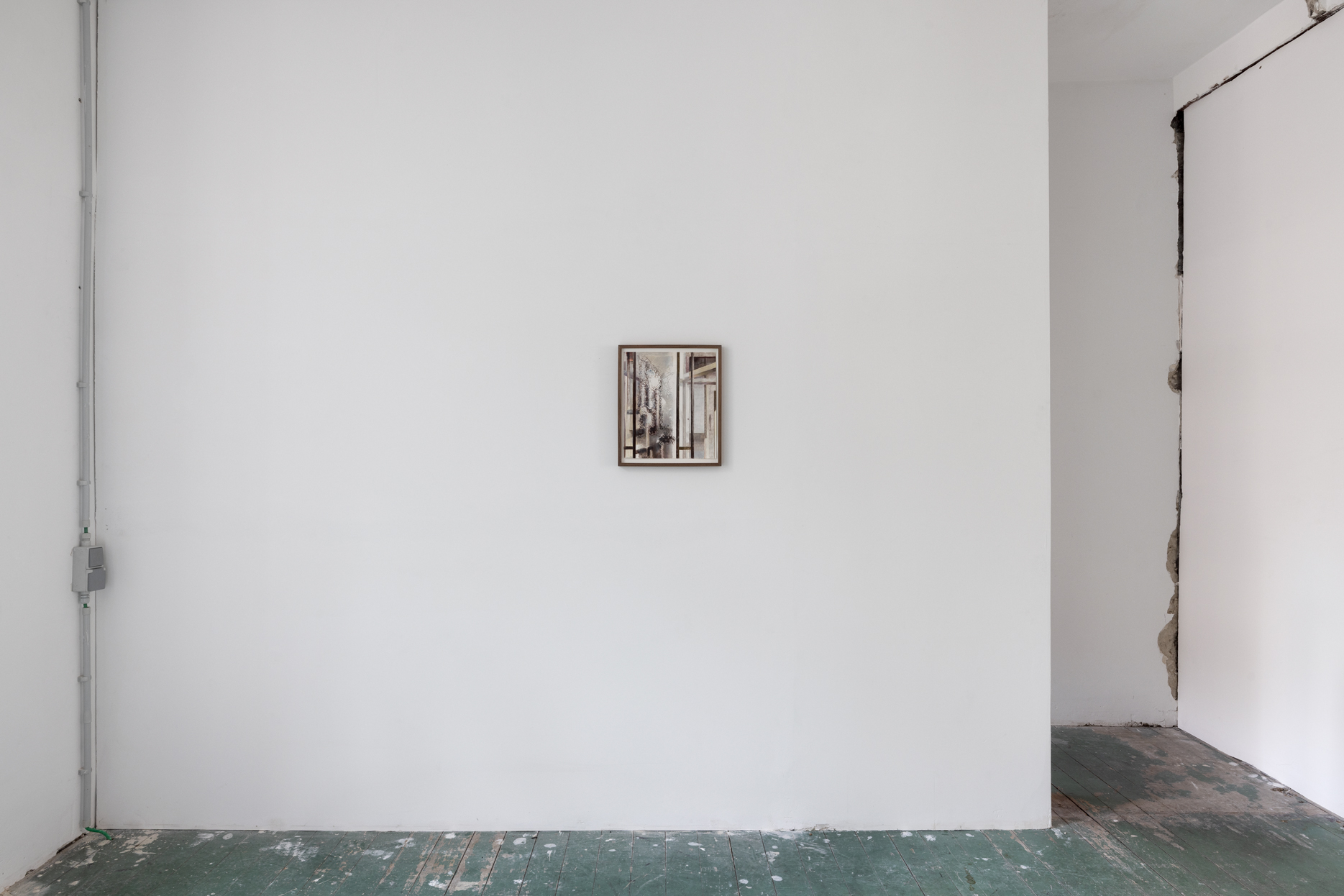
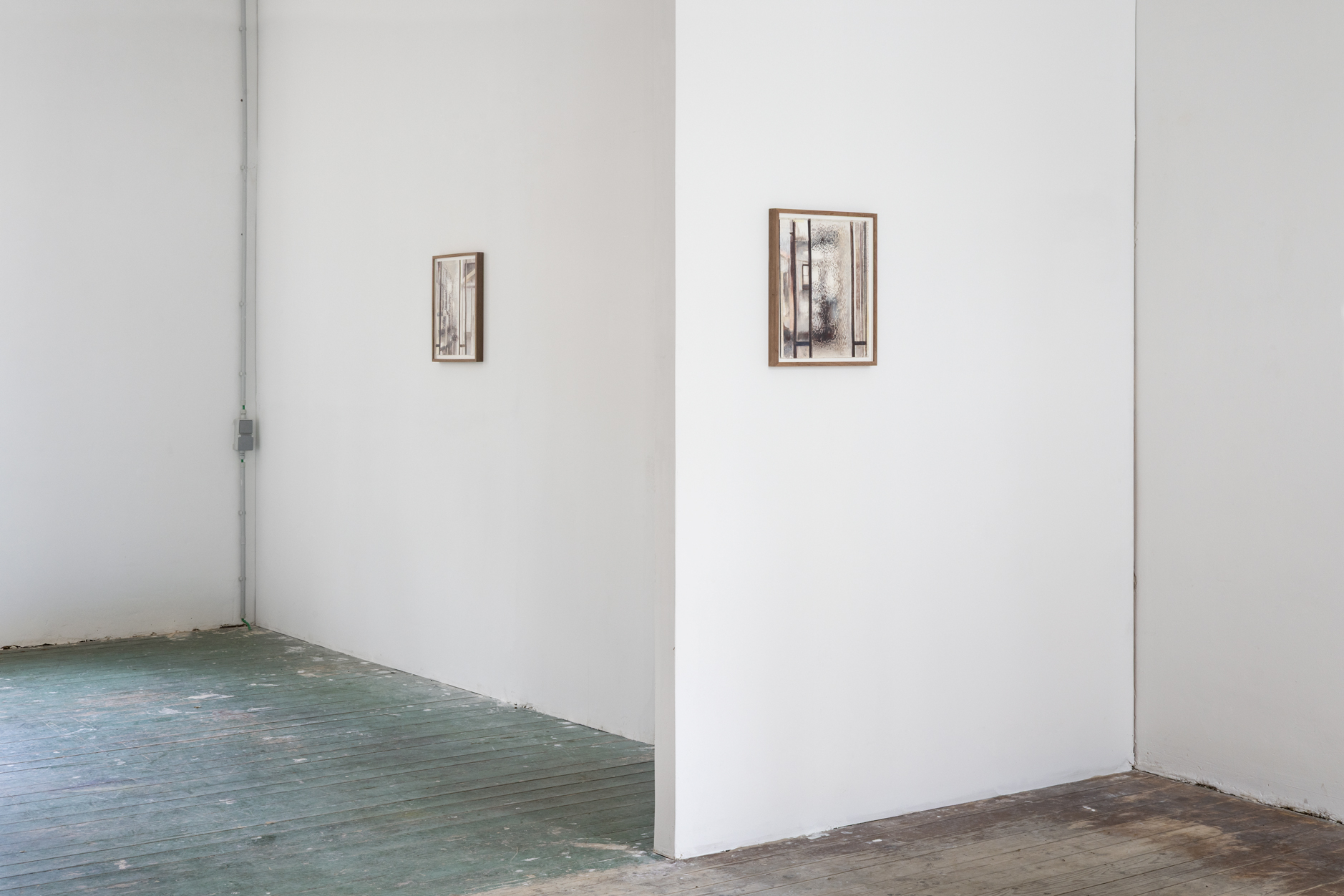
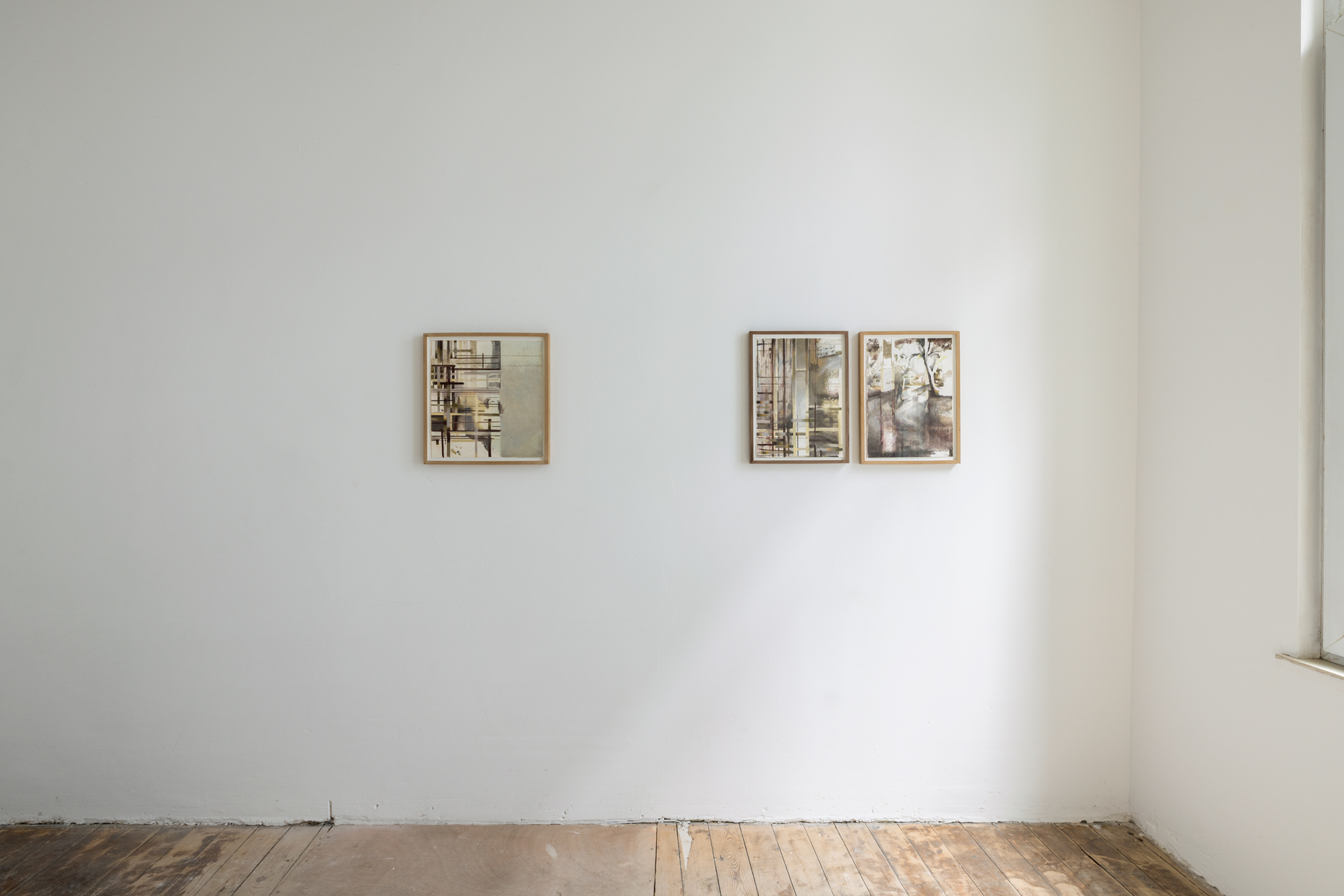
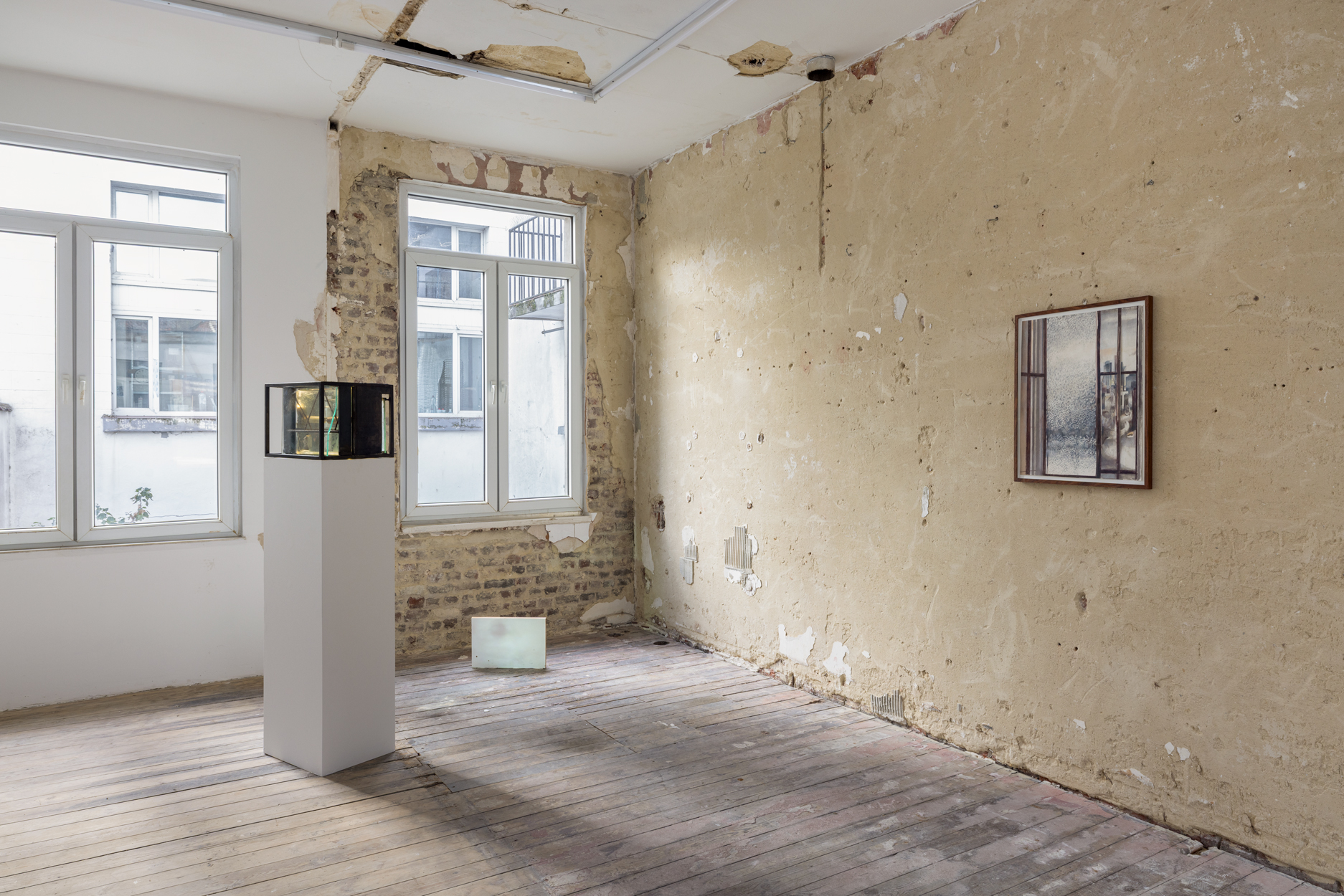
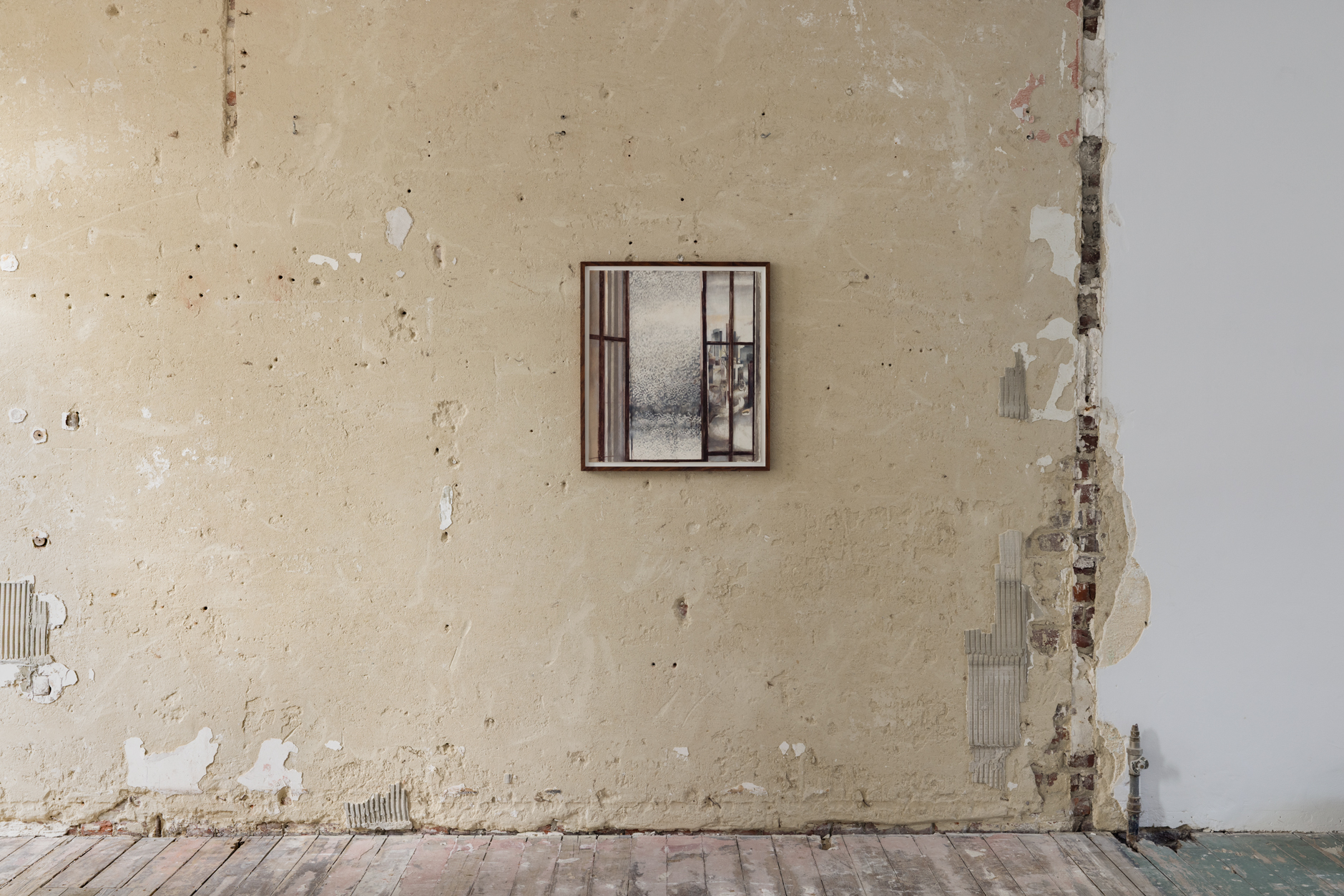
Although Benjamin stated that “Objects made of glass have no ‘aura’,” and that “Glass is, in general, the enemy of secrets,” Lukas seems to challenge this statement. His drawings are full of aura, holding onto what Benjamin’s glass would seem to eliminate – traces that build up through layers of looking, as one view accumulates upon another. His images become extended worlds in which architectural fragments overlap, and different perspectives and degrees of clarity coexist. The image becomes less a window onto a world than a surface on which multiple ones accumulate.
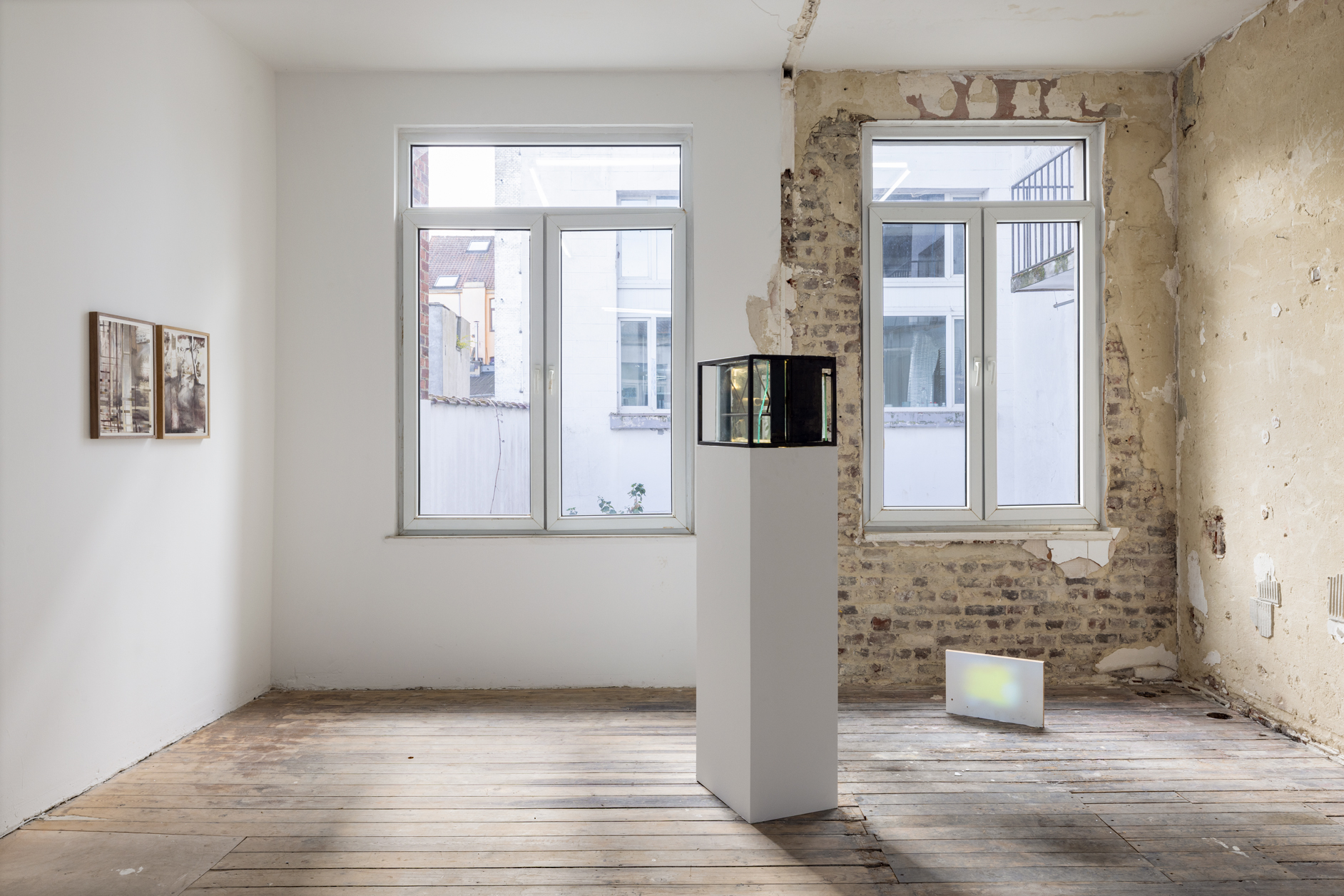
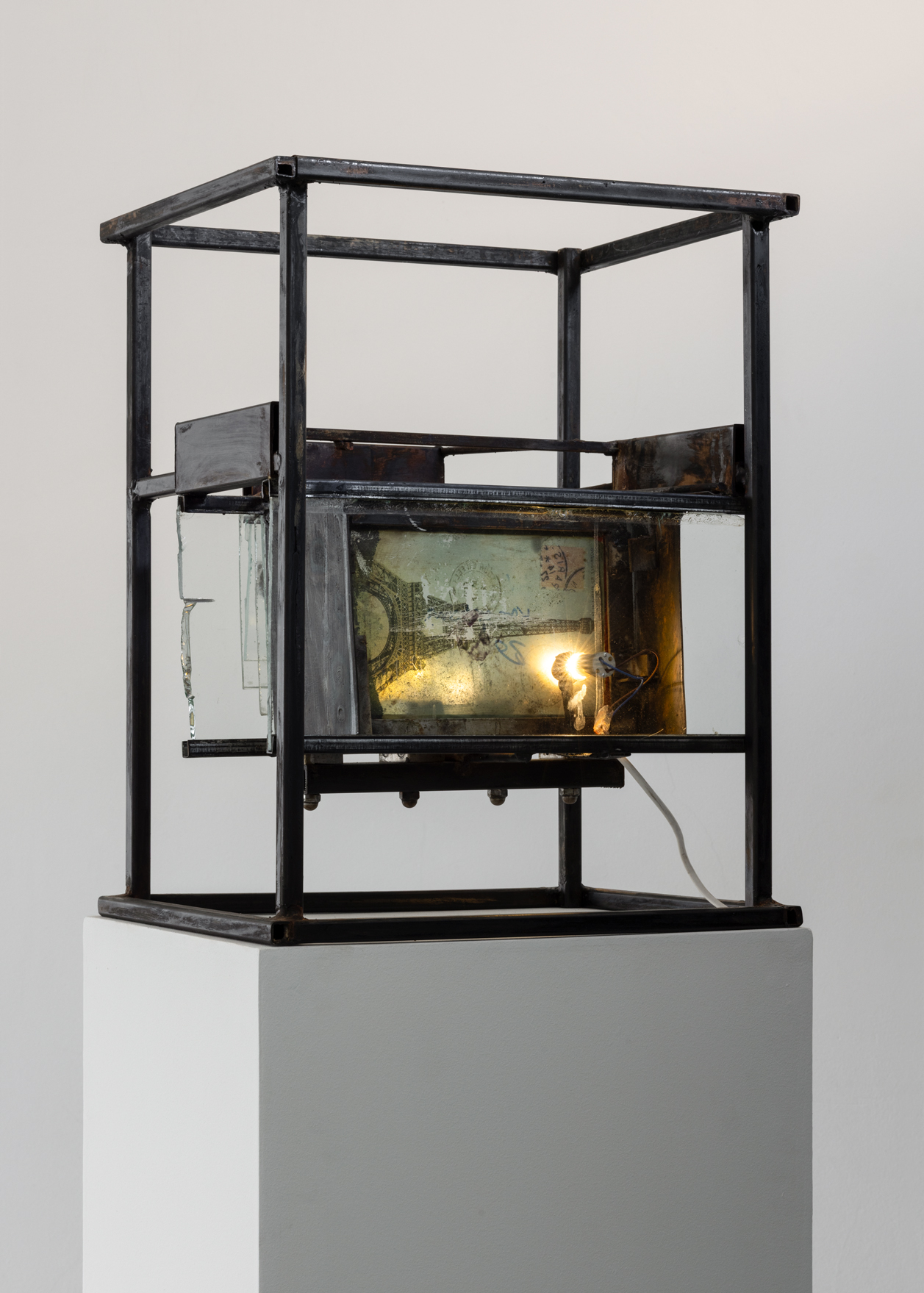
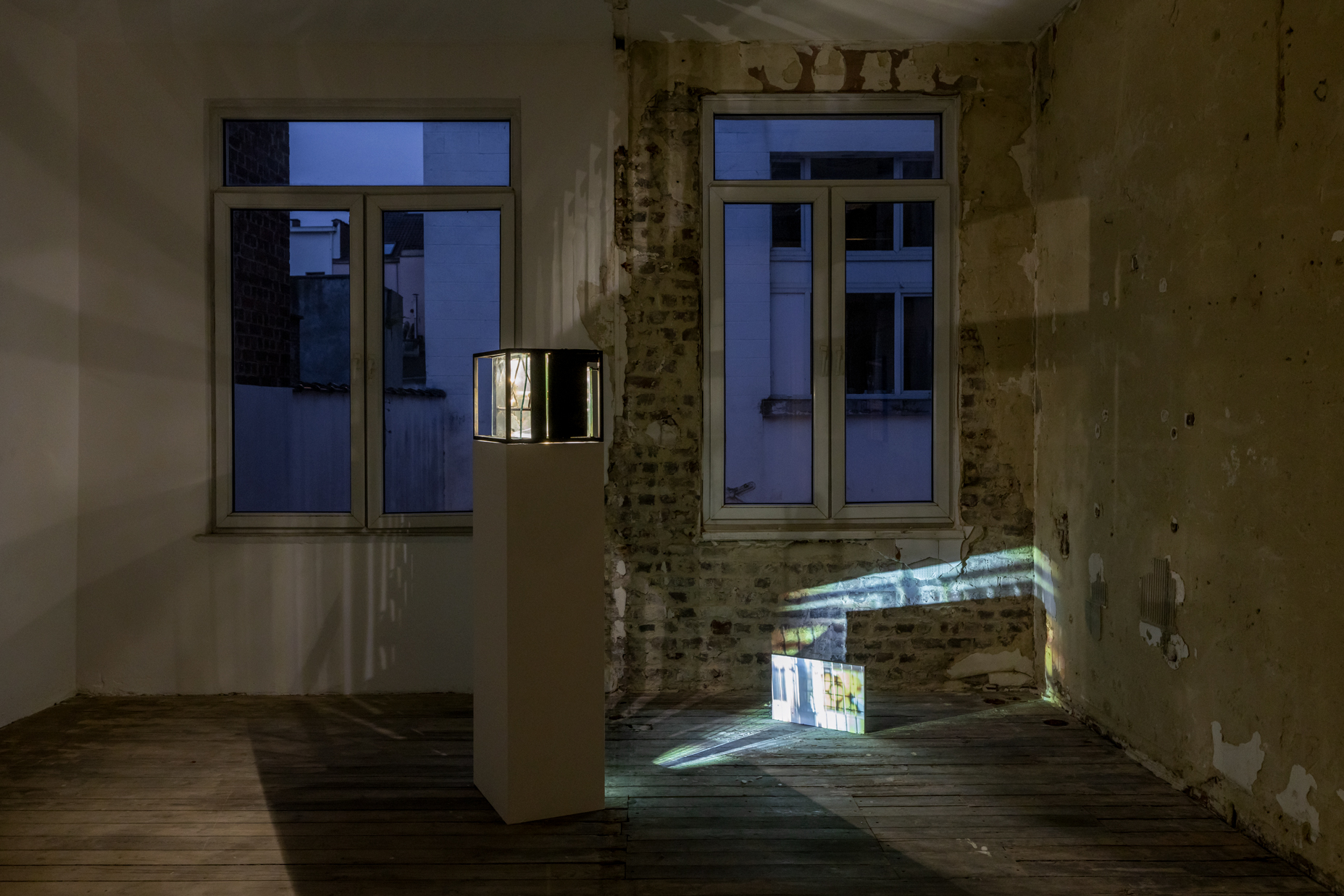
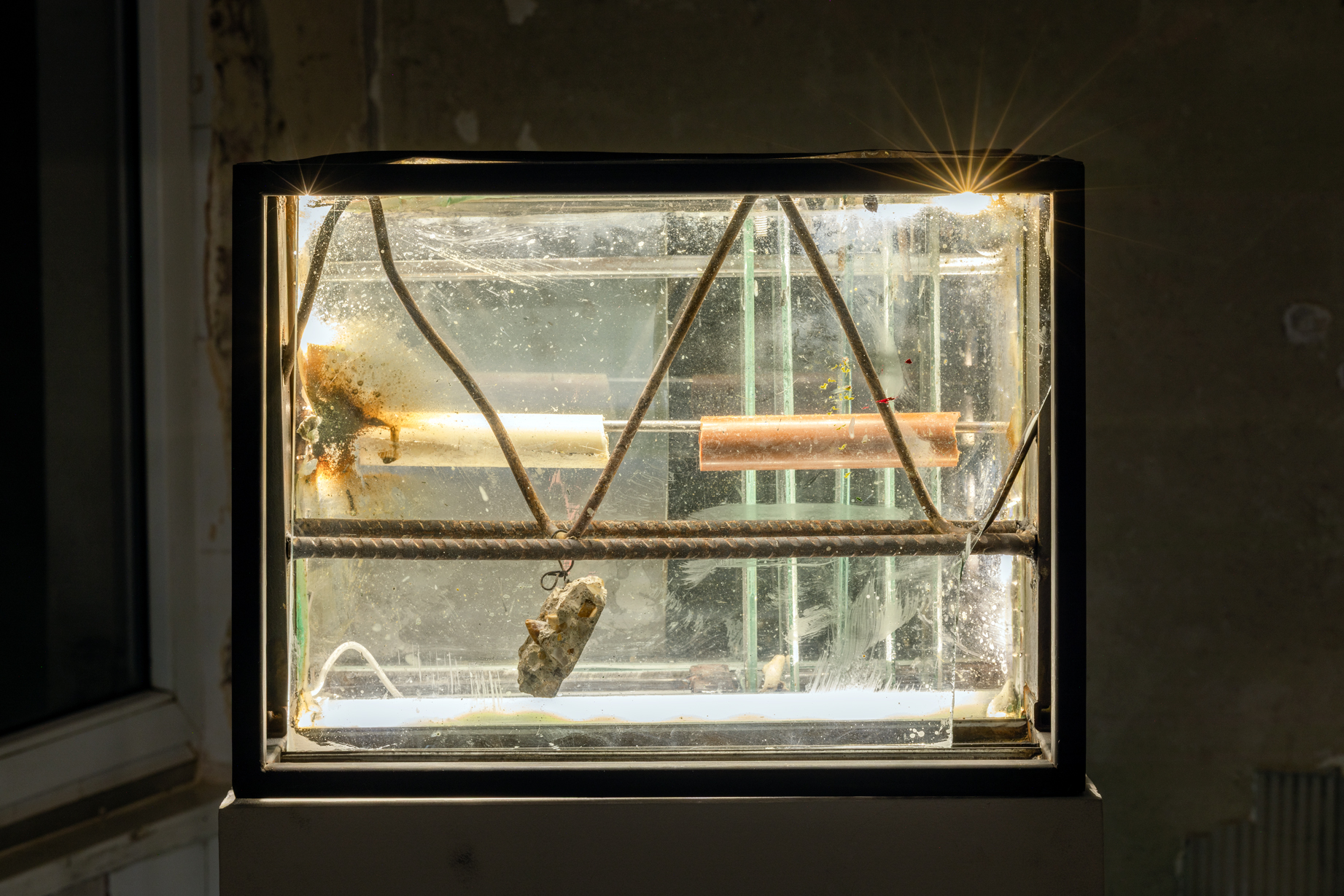
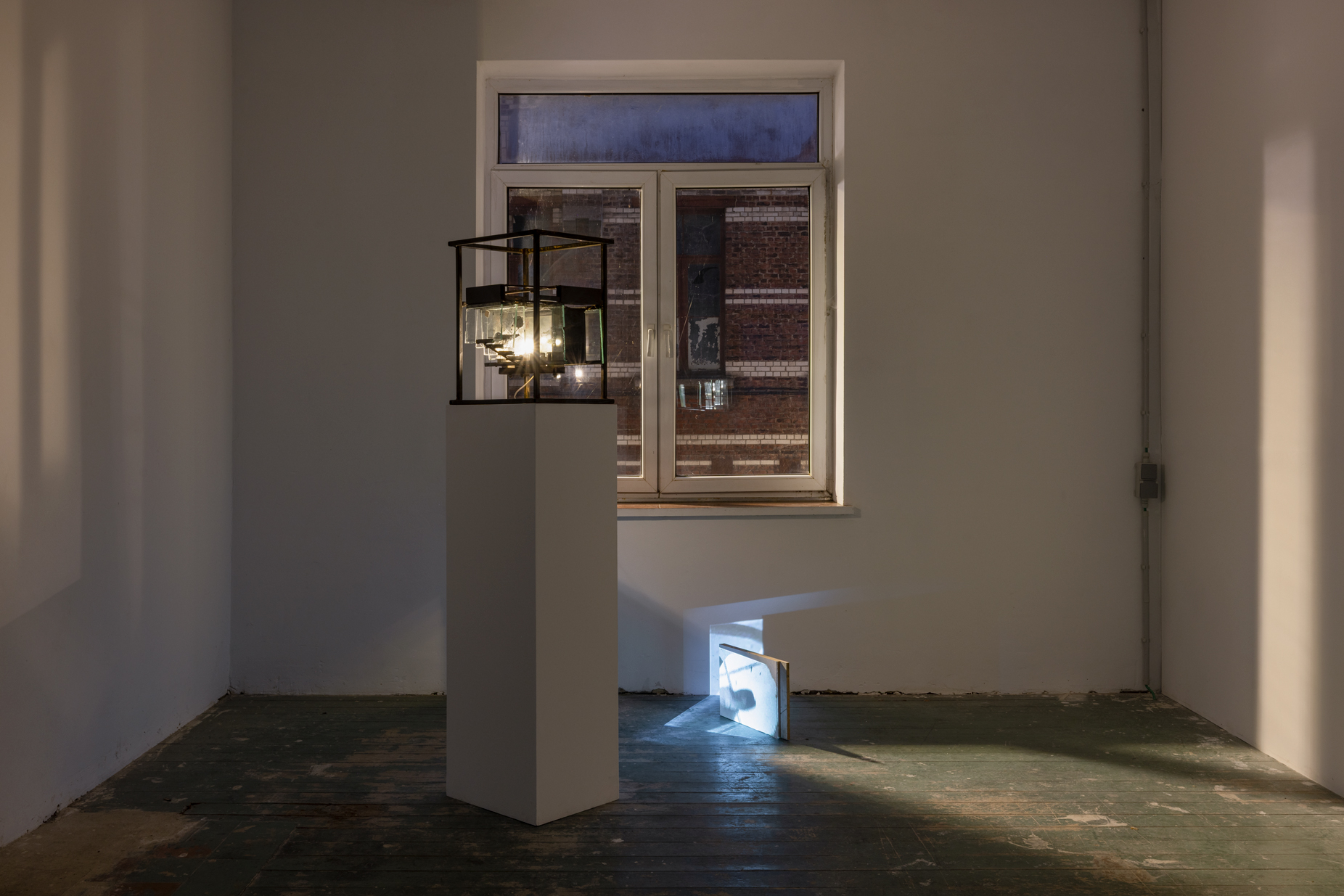
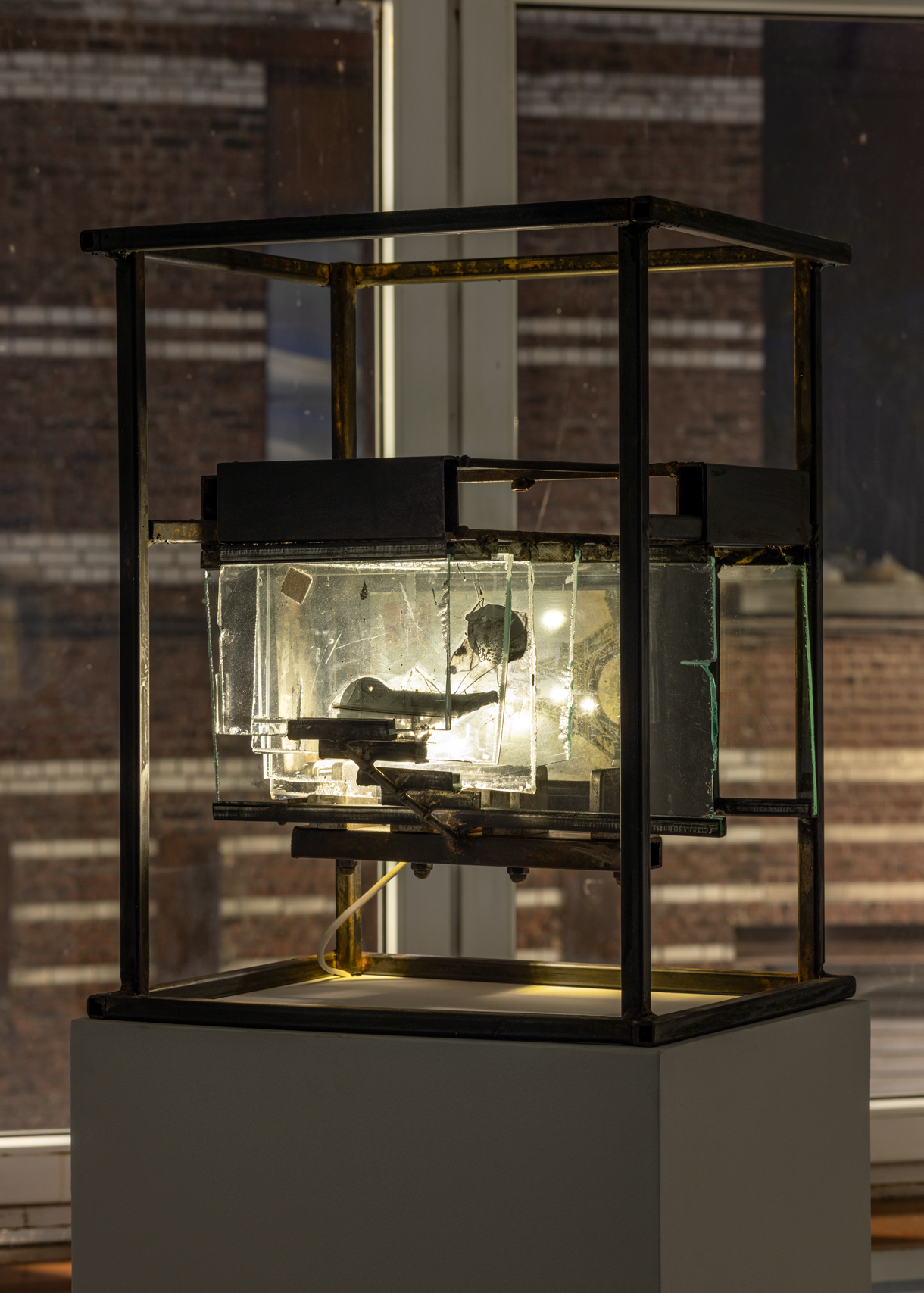
In Matthias’s case, a similar instability describes what exceeds the eye’s attempt to organize a coherent depiction of an image. Something emerges through fractures. Although his sculptures appear to have a decided front, they invite the spectator to move around them, peeking from different sides rather than settling into one particular privileged viewpoint. It is as if crawling through the lens of a camera. Walls seem passable, but only in certain moments, and materials that seem familiar and structurally legible begin to defy representation. The materials are sourced from abandoned buildings, carrying with them the remains of an urban architecture that has already reached its end. Reassembled into new structures, these materials seem to hover between construction and ruin.
Either within the fractured sensation of passing through a wall or in the sensation of being caught between opaque surfaces, the works resist the promise of clear passing through these spaces. Instead, opacity becomes a space in itself – a haven from which to perceive.
There lies a certain backward pull within this modus of thinking and working. Call it nostalgia - although nostalgia is maybe too simple a word. It seems less a longing for the past than the desire to recover something new through it. The romantic ruin – or better, the ruin in reverse1, offers perhaps its most familiar image.